


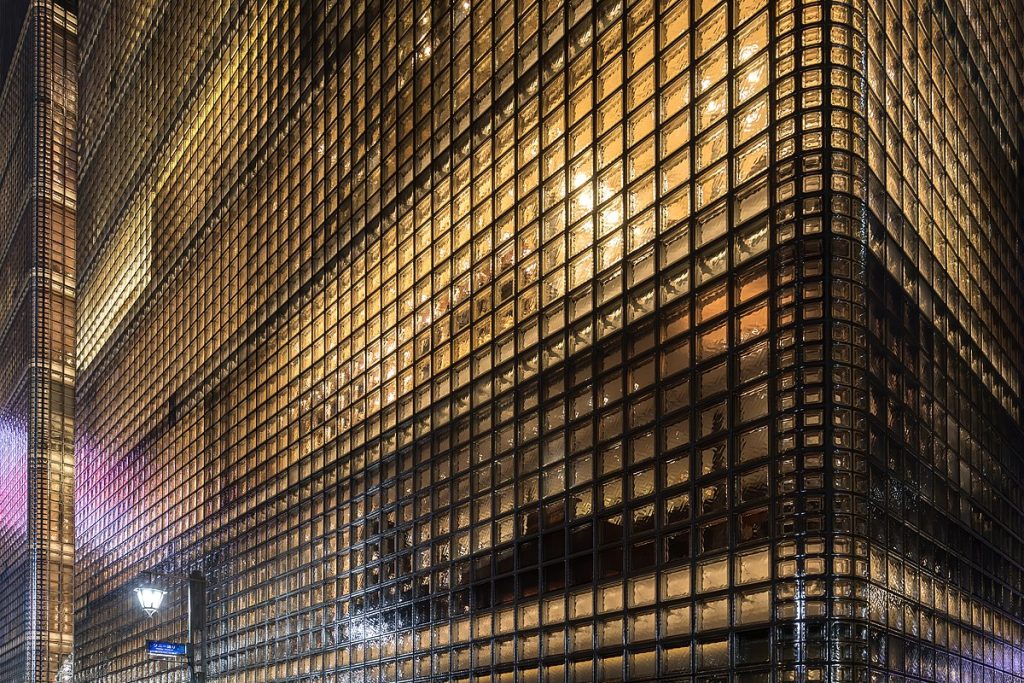
In the Ginza district of Tokyo, Maison Hermès stands as a benchmark of modern architecture. Designed in 1998 by the Renzo Piano Building Workshop (RPBW), the 15-story tower demonstrates how technical innovation, precision, and cultural sensitivity can coexist in a dense urban environment.
Rising 56 meters on a narrow plot, the building features a façade made of 13,000 custom glass blocks, crafted in Florence by Vetroarredo. The translucent glass references traditional Japanese shoji screens, reflecting light by day and glowing subtly at night.
Maison Hermès Tokyo goes beyond a standard headquarters, its design balances transparency and privacy, with retail spaces on the lower floors, ateliers and offices above, and a double-height gallery for exhibitions. At the top, a hidden courtyard garden provides a quiet retreat in the city’s heart. The building’s innovative use of glass, light, and engineering, along with its careful attention to cultural context, makes it a landmark of modern architecture, a structure that continues to set a standard for urban design in Tokyo.
The building’s exterior is instantly recognizable. The translucent glass blocks, each 45 centimeters, not only create a poetic play of light but also absorb seismic forces, allowing the tower to flex with earthquakes rather than resist them. During the day, the façade shimmers silver; by night, it transforms into a glowing lantern, anchoring Ginza’s neon-lit streetscape with subtle elegance. Maison Hermès balances technical innovation with cultural sensitivity. The ground floor features transparent glass bricks, allowing passersby to glimpse Hermès creations, while traditional shop windows line Harumi Avenue, preserving a sense of accessibility and exclusivity. This interplay of concealment and revelation mirrors the maison’s identity: refined, yet inviting. As can be seen in this photograph taken by Basile Morin.
Inside, the tower unfolds into distinct vertical zones. The first four floors host Hermès retail spaces, reflecting Parisian refinement while catering to Tokyo’s discerning clientele. Above, ateliers and offices span several levels, embodying the quiet efficiency required for luxury operations.
The seventh floor reveals a double-height gallery for exhibitions, bridging fashion, art, and culture beyond commerce. At the very top, a hidden courtyard garden offers a serene oasis, a rare retreat in Tokyo’s dense urban landscape, where space itself becomes a luxury.
More than two decades after its completion, Maison Hermès Tokyo remains a masterclass in modern architecture. Its fusion of light, glass, engineering, and Japanese aesthetics continues to influence designers worldwide. Renzo Piano’s creation proves that architecture can be both technically brilliant and emotionally resonant, a building that breathes, glows, and endures.
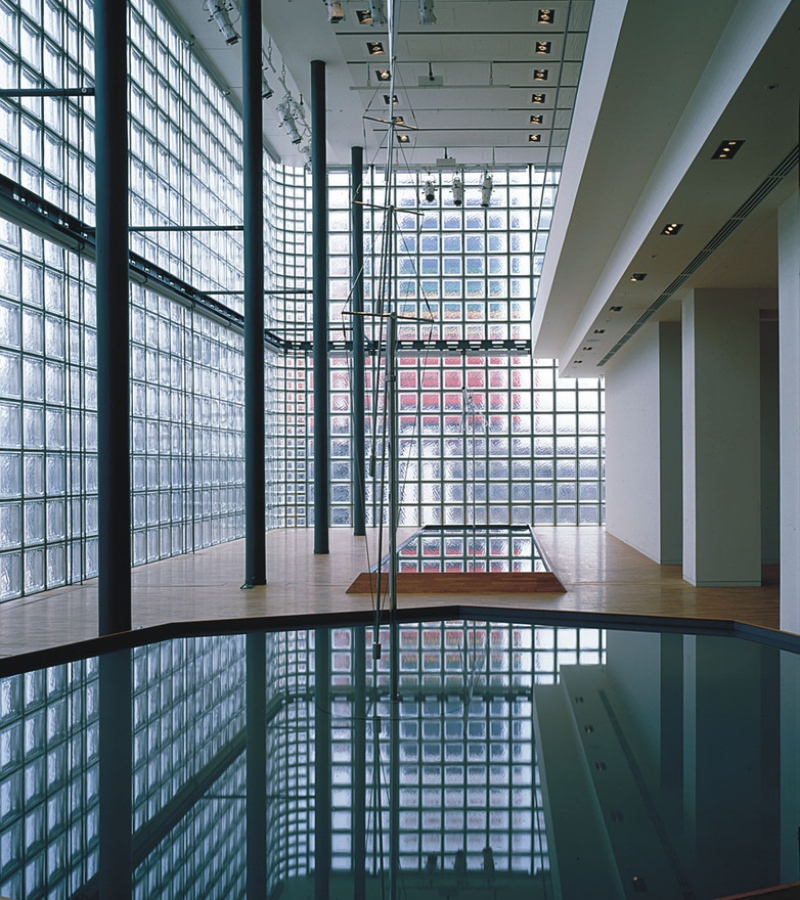
Photo credit: Hermes Tokyo


