

Hugs have always held a quiet power. In art, they appear again and again, not as decoration, but as a way to show connection, care, and shared emotion. Across centuries, artists have returned to this simple gesture, finding in it endless possibilities for expression. Some capture tenderness, others tension, and all reveal something essential about human relationships. Exploring ten remarkable examples, we can see how the embrace has inspired creativity and continues to speak to the human experience.
During his renowned “Golden Phase,” Klimt portrays a couple locked in a tender embrace, their forms intertwined with intricate gold patterns that blend them into the background. The painting conveys love and passion, using the embrace to suggest a profound sense of unity between the two figures.

PH: Google Cultural Institute
The story of Cupid and Psyche is a timeless tale of lovers navigating seemingly endless trials: betrayal, separation, disapproving parents, near-death experiences, and the divide between mortal and god. In the end, love triumphs.
In the second century, Lucius Apuleius’s Metamorphoses recounted their tumultuous relationship, and the story soon became a popular subject for artists across painting and sculpture. Psyche, a woman of extraordinary beauty born to noble parents, is treated almost like a goddess. Her allure incites the jealousy of Venus, who sends Cupid to curse her. Yet Cupid falls in love at first sight, visiting her each night and insisting she never see his face. Unable to resist, Psyche peeks through the shadows, betraying his trust.
Psyche’s transgression results in a deathlike sleep, but Cupid cannot bear to lose her. He revives her and wraps his arms around her in a moment of tender reunion. This instant is immortalized in Antonio Canova’s marble masterpiece, Psyche Revived by Cupid’s Kiss.
The work’s power extended even to Gustave Flaubert, who famously described the overwhelming sensation of kissing the statue: „I have seen nothing else in the gallery. Several times I returned and at the end I kissed the armpit of the woman, who is sinking down and stretching her long marble arms to the messenger of love. Please forgive me! It was my first sensual kiss after a long time.”
By Jean-Pol GRANDMONT – Own work, CC BY 4.0 Source here
Egon Schiele, celebrated for his raw and expressive portrayals of the human body, captures a striking moment of intimacy in The Embrace. The figures cling to one another, their closeness conveying both passion and vulnerability. The work draws the viewer into the intensity of the connection, making the embrace feel immediate, emotional, and profoundly human.

In this painting, Frida Kahlo portrays an intimate embrace with her husband, Diego Rivera, capturing the complexity of their passionate and often turbulent relationship. The gesture reflects both personal affection and their shared creative and ideological bond, intertwining love with the forces that shaped their artistic lives.

PH: Portland Art Musseum (Facebook)
Renoir, known for his lively Impressionist portraits, reached a turning point with Dance in the Country and Dance in the City. Inspired by a trip to Italy and the work of Cézanne and Raphael, he began defining his figures more clearly while keeping the warm, luminous quality of his earlier style.
In Dance in the Country, Paul Lhôte models the gentleman, arm around his partner, while the woman, likely Aline Charigot, meets the viewer with a flushed, knowing smile. Their embrace conveys both intimacy and companionship, a quiet reflection of love and support amid Renoir’s artistic evolution.

Pierre-Auguste Renoir, Danse à la campagne (1883). Courtesy of Musée d’Orsay.
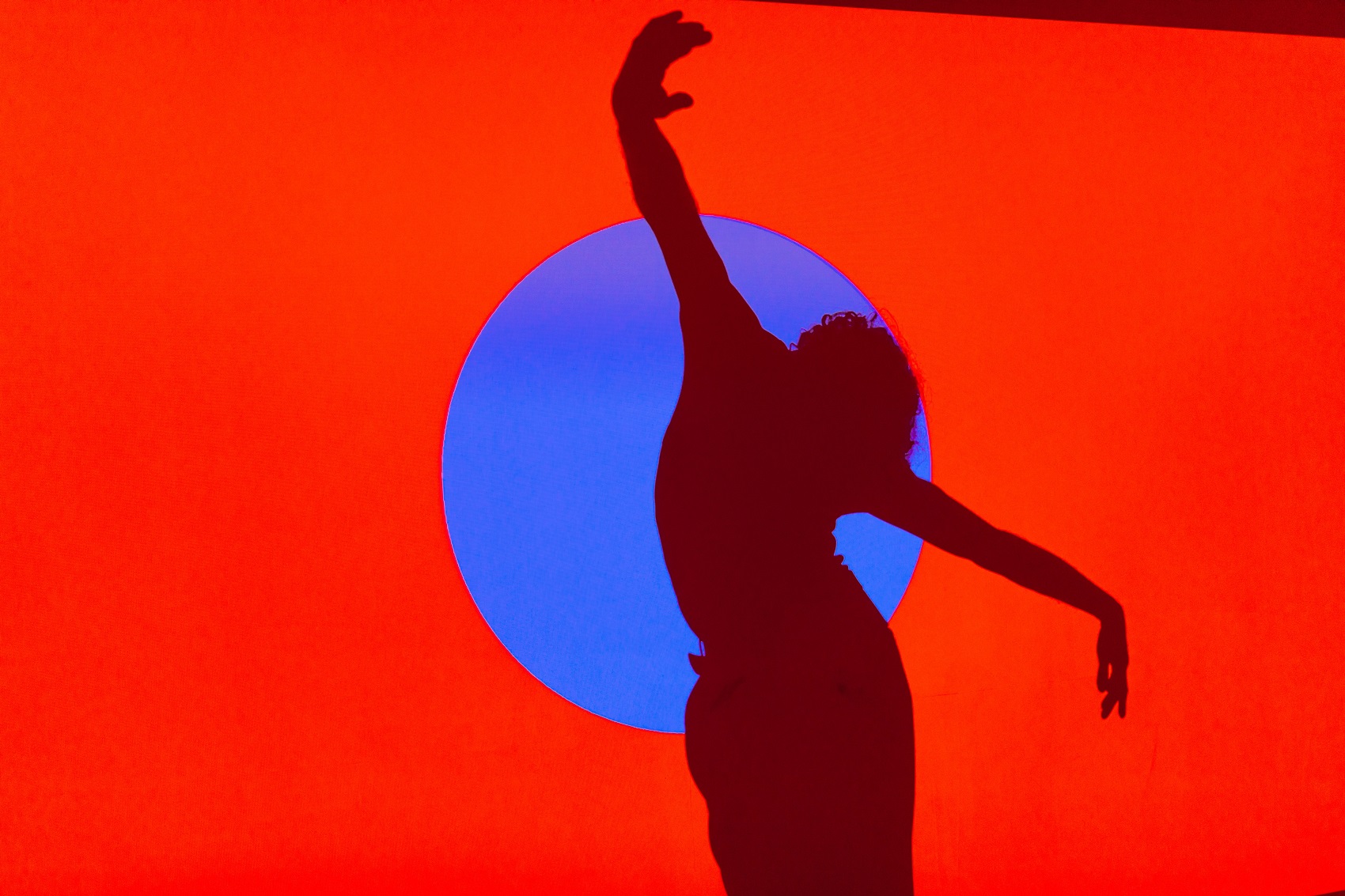
Keith Haring is widely recognized for his bold lines, dynamic figures, and socially charged imagery. The embrace appears repeatedly in his work, serving as a way to explore themes of friendship, love, and solidarity. In these pieces, Haring depicts simplified, almost silhouette-like figures locked in a hug. Defined by thick outlines and filled with strong colors or graphic patterns, the figures radiate movement and energy, transforming the embrace into a clear expression of human connection and joy.

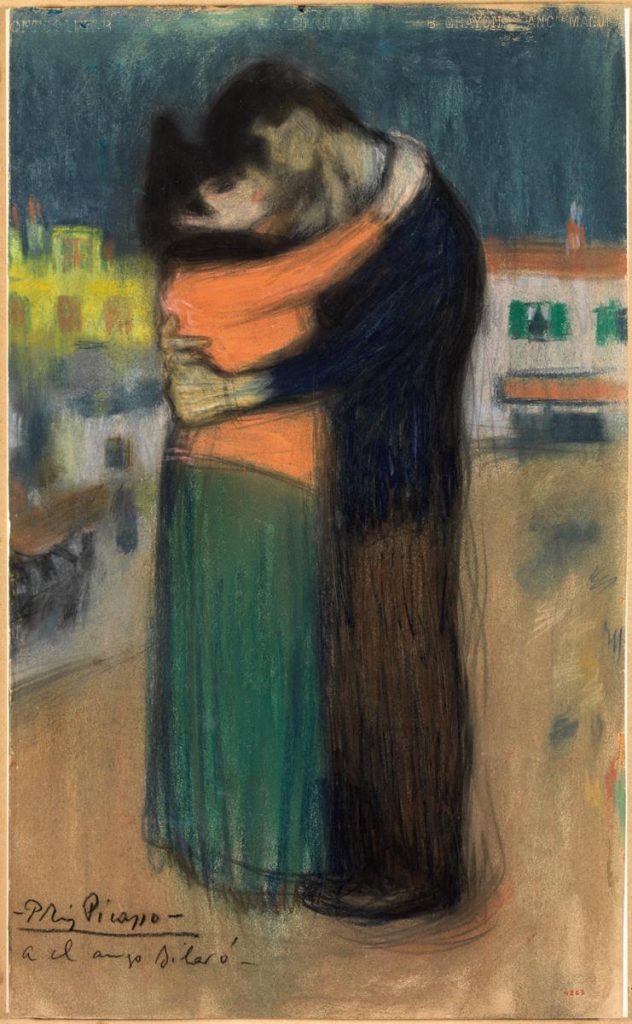
In The Embrace, Picasso breaks down the human form to convey emotion rather than likeness. The two figures come together in a compact, abstract composition that emphasizes closeness and tension. The work reflects his persistent drive to explore basic human feeling through constantly evolving visual language.
In this haunting image, Magritte portrays two lovers in the act of kissing, their faces completely veiled in white cloth. The fabric prevents direct contact and obscures their identities, yet the closeness of their bodies suggests an emotional bond that endures despite the barrier. The embrace becomes less about physical touch and more about the tension between intimacy and distance, a theme that recurs throughout Magritte’s work.

PH: WikiArt.org
Sandy and Her Husband captures a quiet, intimate moment between a couple. They sway together in their stylish apartment, fingers intertwined, eyes closed, absorbed in a private rhythm. The space, rendered in the artist’s rich palette, is filled with the patterns and textures of 1970s decor, enhancing the warmth and familiarity of the scene.
Considered one of the most romantic contemporary paintings, it showcases the work of Faith Ringgold, who was part of the influential Spiral group and spent decades portraying Black life with keen observation and emotional depth.

Emma Amos, Sandy and Her Husband (1973). Courtesy of the Cleveland Museum of Art.
While not a hug in the usual sense, the famous near-touch of God and Adam’s hands in the Sistine Chapel conveys a profound connection. This Renaissance masterpiece transforms a simple gesture into a visual embrace, bridging the human and the divine and suggesting the spark of life and shared existence.