

In the world of fine art, auction records are meant to be broken, but only a select few sculptures have entered the nine-figure territory. These masterpieces are the result of artistic innovation, exceptional rarity and decades of growing demand among collectors. Following the landmark sale of Constantin Brâncuși’s Danaïde in 2026, the list of the world’s most expensive sculptures welcomed a new entry near the very top.
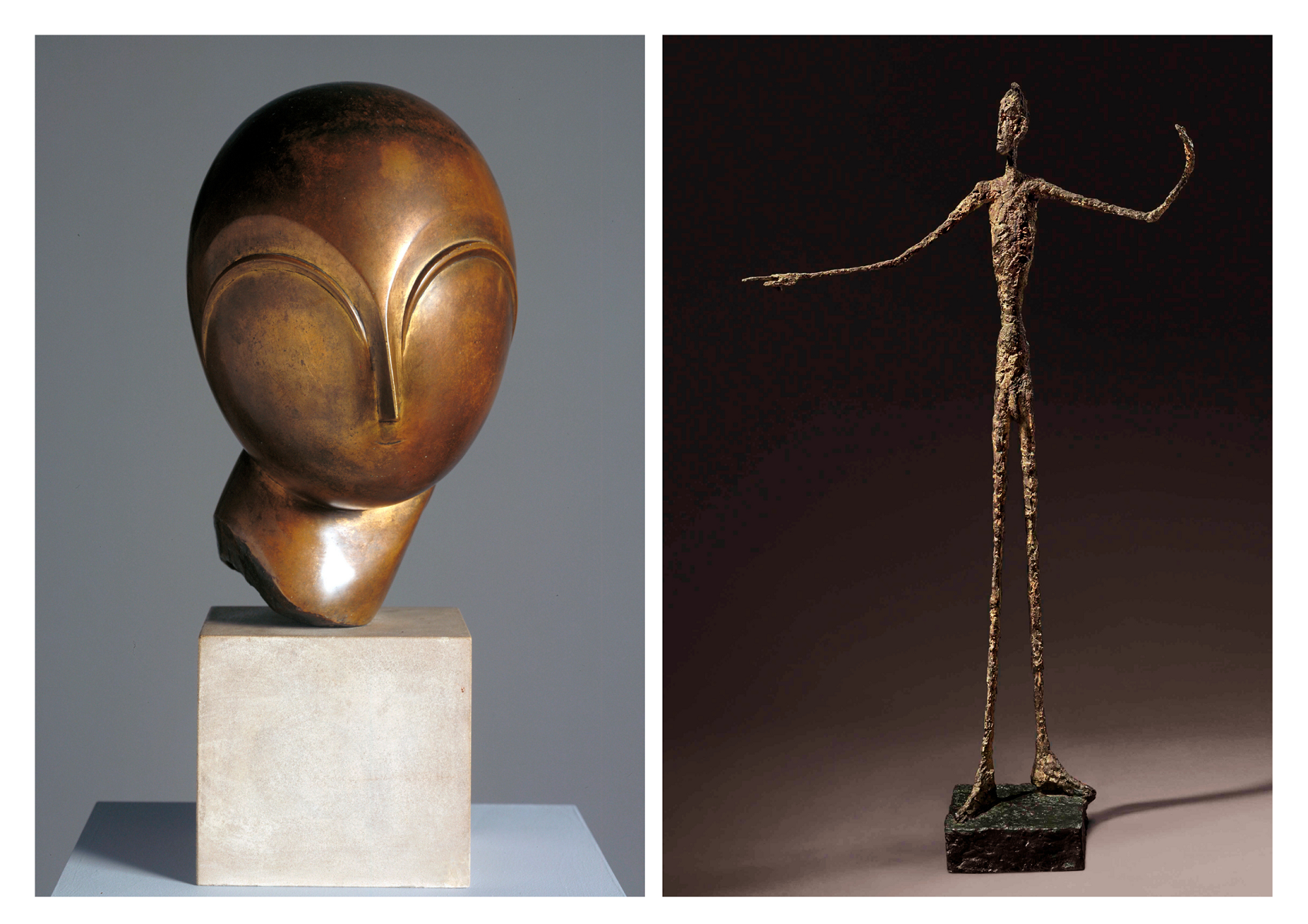
Alberto Giacometti has dominated the sculpture market for years, and L’Homme au doigt remains the benchmark by which every major sale is measured. Auctioned at Christie’s New York in 2015, the bronze achieved an extraordinary $141.3 million, a record that still stands.
Created in 1947, the life-sized figure is one of Giacometti’s most expressive works. Its elongated proportions, rough surface and dramatic gesture embody the artist’s exploration of isolation, vulnerability and the human condition in the aftermath of World War II. With only a handful of lifetime casts in existence, every example is considered museum-caliber.

Alberto Giacometti, L’Homme au doigt
The biggest change to the rankings came in May 2026, when Constantin Brâncuși’s Danaïde sold for $107.6 million at Christie’s New York. The result established a new auction record for the Romanian master and moved the sculpture into second place among the most expensive sculptures ever sold.
Completed in 1913, Danaïde belongs to Brâncuși’s early exploration of simplified forms that would redefine modern sculpture. The bronze offered at auction featured its original brown patina enhanced with gold leaf and was the only gilded version still in private ownership. Its provenance, rarity and art historical significance sparked fierce competition before the hammer fell.

Constantin Brancusi, Danaide
When Sotheby’s offered L’Homme qui marche I in London in 2010, the sculpture became the first ever to sell for more than $100 million. For more than fifteen years, it ranked as the second most expensive sculpture sold at auction before being overtaken by Brâncuși’s Danaïde.
The work captures a solitary figure walking with quiet determination, transforming a simple human gesture into a powerful symbol of resilience. Today, it remains one of the defining masterpieces of twentieth-century sculpture.

Alberto Giacometti, L’Homme qui marche I
Few artists have achieved the market success enjoyed by Giacometti, whose Chariot became his third sculpture to surpass the $100 million mark when it sold at Sotheby’s New York in 2014. The sculpture depicts a slender female figure standing atop a wheeled platform, a composition inspired by ancient ceremonial chariots. Balancing elegance with psychological intensity, Chariot reflects the distinctive visual language that made Giacometti one of the most influential sculptors of the modern era.

Alberto Giacometti, Chariot
Jeff Koons secured his place in auction history when Rabbit sold for $91.1 million at Christie’s New York in 2019, making it one of the most valuable contemporary sculptures ever sold. Produced in mirror-polished stainless steel, the sculpture elevates the familiar shape of an inflatable rabbit into a flawless, industrial object. Although playful in appearance, Rabbit has become a defining work of contemporary art, admired for its technical precision and its commentary on consumer culture. The record-breaking sale confirmed its status as one of the most coveted sculptures of the late twentieth century.

Jeff Koons, Rabbit
Record-breaking sculptures rarely owe their value to a single factor. Their prices reflect an exceptional combination of rarity, provenance, historical importance and the reputation of the artist. Most are represented by only a handful of lifetime casts or are unique works that spend decades in prestigious private collections before returning to the market.
Together, these five sculptures chart the evolution of modern and contemporary sculpture. From Brâncuși’s revolutionary reduction of form to Giacometti’s existential figures and Koons’ polished reinterpretation of everyday objects, they demonstrate why sculpture continues to command some of the highest prices in the global art market.