
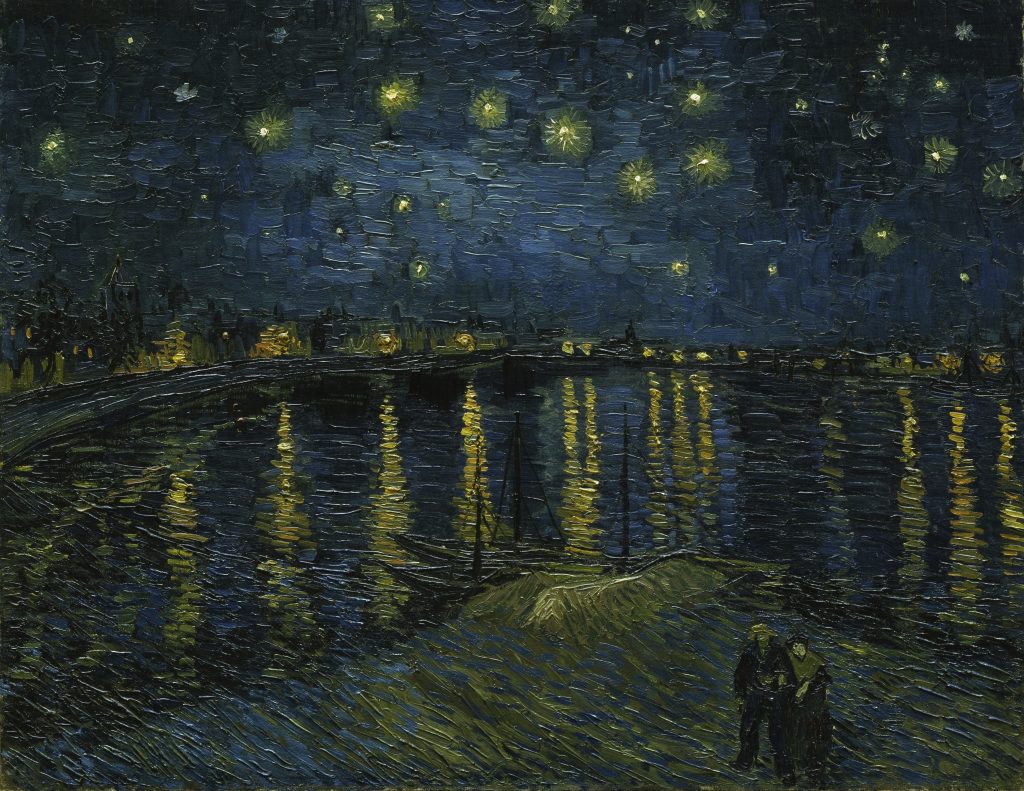
Vincent van Gogh is one of the most recognized artists in history, yet also one of the most misunderstood. His paintings are celebrated worldwide, reproduced endlessly, and admired for their emotional force. At the same time, his life is often reduced to a single tragic narrative. To truly understand van Gogh, it helps to look beyond the myths and into the facts that shaped both the man and his work.
Here are ten essential things to know about one of the most famous and influential figures in the history of Western art:
Vincent Willem van Gogh was born on March 30, 1853, in Zundert, a small village in the Netherlands. His father was a Protestant minister, and the family life was disciplined and religious. Vincent was named after an older brother who had died the year before, an early tragedy that shaped his sensitive and reflective nature.
Before dedicating himself to painting, van Gogh worked as an art dealer and pursued religious work. He wanted to become a minister but was denied entry to theological studies because he refused to learn Latin. He then served as a lay preacher among coal miners in Belgium, living in extreme poverty to share their hardships. He gave away his own clothes and possessions, but eventually the church dismissed him for taking his devotion too far. After this experience, he committed fully to art, hoping it could bring comfort and meaning to people’s lives.
Van Gogh did not follow a traditional art education. He taught himself by copying works of artists he admired and studying manuals. Early influence came from the French Barbizon painters, especially Jean-François Millet, who depicted peasants and rural life. This influence is most visible in The Potato Eaters (1885), a dark and intimate portrait of peasant labor and life.
Vincent’s younger brother, Theo, was more than family; he was his anchor. Theo worked as an art dealer in Paris and supported Vincent both emotionally and financially. Their letters to each other offer a rare glimpse into Vincent’s thoughts, ambitions, doubts, and emotional world. Without Theo, Vincent might never have been able to sustain his intense, relentless work as an artist.
In 1888, Van Gogh left Paris and moved to Arles in southern France, hoping to build an ideal artist community. Later that year, at the request of his brother Theo, Paul Gauguin joined him. The two artists lived and worked together in the “Yellow House” for several weeks, each painting portraits of the other. Their collaboration was intensely productive, but tensions grew, culminating in a heated argument after which Gauguin abruptly left. This conflict was the catalyst for Van Gogh’s infamous act of cutting off part of his left ear.
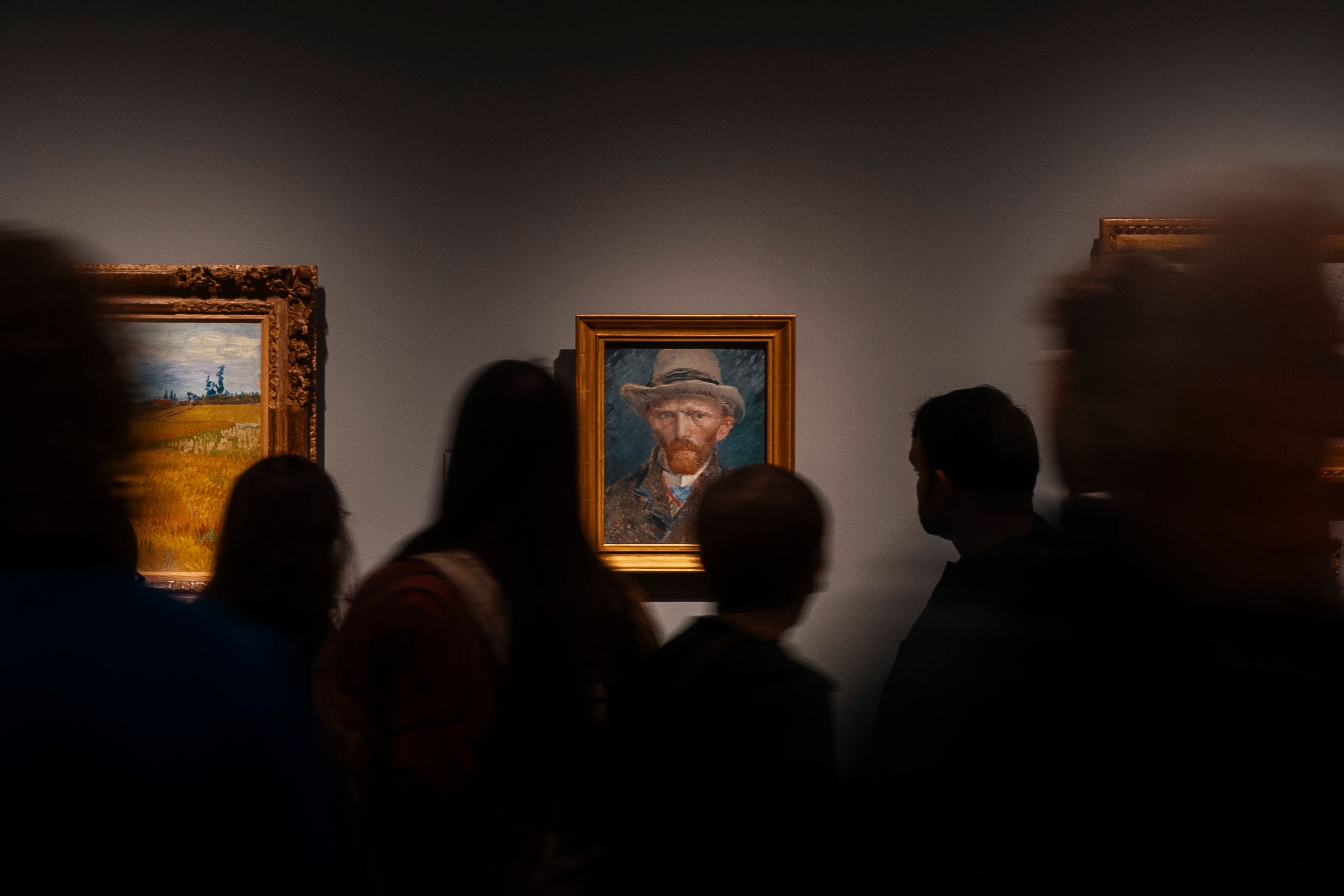
Throughout his career, Van Gogh painted 43 self-portraits. Money was tight, so he could rarely afford to hire models. Instead, he used a mirror to capture his own image. His red hair, green eyes, and angular features appear in many works, yet each portrait offers a subtly different version of himself. While he often presents a serious expression, the self-portraits reveal layers of his character, offering a window into the mind of one of history’s most intense and passionate artists.
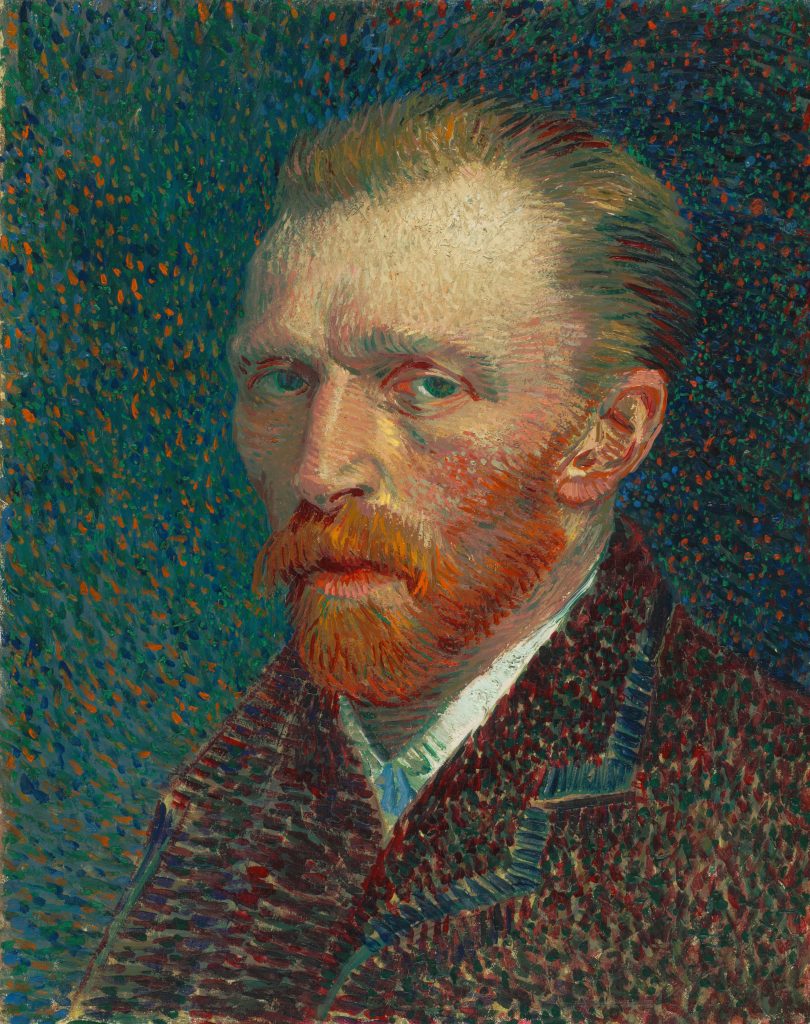
Self-Portrait
Today, Van Gogh’s paintings rank among the most valuable in the world, yet during his life he was largely unknown. In early 1890, the year he died, an independent artists’ exhibition called “Les Vingt” took place in Brussels. Ten of Van Gogh’s works were selected for the show, and the reception was encouraging. Theo wrote to Vincent to share the good news, noting that his brother was beginning to receive some recognition for his talent, a rare glimpse of validation in an otherwise difficult life.
After the infamous ear incident, Van Gogh spent a year in a psychiatric hospital in Saint-Rémy-de-Provence. Even within the walls of the facility, his creativity never waned. He completed nearly 150 paintings, among them the striking Almond Blossom. The hospital’s walled garden became a familiar backdrop for his work, and he was granted a second room to serve as a studio, giving him the space to paint despite his ongoing mental struggles.
One of the last paintings Van Gogh completed was his portrait of Dr. Paul Gachet, a homeopathic physician known to many artists of the time. After Vincent’s release from the psychiatric hospital, his brother Theo arranged for Gachet to support him. In the painting, the doctor holds a sprig of foxglove, a plant long believed to have healing powers. Gachet never gave Vincent medical treatment, but he welcomed him into his home, listening, talking, and encouraging him to keep painting.
Despite this care, on July 27, 1890, Van Gogh went out into a field to work and is believed to have shot himself in the stomach. He died two days later, with Theo by his side. Letters from the weeks leading up to his death reveal a man struggling with his mind, a glimpse into the pain that haunted him.
Some researchers and biographers have suggested a different possibility: Van Gogh may have been accidentally shot or even attacked, and his death misinterpreted as suicide. While this idea has sparked debate, it remains controversial, and most historians continue to recognize suicide as the most likely explanation.
After Theo’s death, just six months following Vincent’s passing, his wife Jo Bonger inherited the collection of Van Gogh’s works. Determined to fulfill Theo’s lifelong goal of sharing his brother’s art with the world, Jo took action. She organized exhibitions, promoted sales, and tirelessly worked to introduce Vincent’s paintings to audiences far beyond their home. Thanks to her dedication, the world began to recognize Van Gogh not just as a brilliant painter, but as one of history’s most celebrated artists.