

M.D. Burnette approaches each creation as an expression of presence and self. Silk moves naturally, gold accents add subtle strength, and every detail is shaped to support the woman who wears it, not just physically, but emotionally and energetically. In this interview, she explores how her designs awaken the inner goddess, allowing femininity to be experienced fully, with confidence, softness, and authenticity. Each dress captures movement, shine, designed to make the woman feel powerful, elegant, and unmistakably herself.
1. Before the brand had a name, what was the first real step? Was there a specific moment, conversation, or inner shift that made you say, “I am doing this”?
M.D.Burnette: I grew up in an entrepreneurial environment. The idea of “getting a job” was never framed as the default path—people around me built businesses, not careers inside someone else’s structure. So for me, it didn’t feel like a dramatic decision or a single turning point. It felt inevitable, like something my life had been quietly preparing me for over time. The brand wasn’t a leap—it was a continuation.
2. What drew you specifically to silk and gold-plated elements as the core of your visual language? What do these materials allow you to express that others cannot?
Maria: Metal came first, actually. It’s industrial and technical—working with it requires knowledge, precision, and an understanding of how things are constructed. I was exposed to metal accessory manufacturing early on, so it felt familiar.
Metal accessories also give structure. You’re not starting from nothing each time—the piece begins with an anchor, and the shape evolves around the hardware. In many ways, the accessory becomes the architecture of the design.
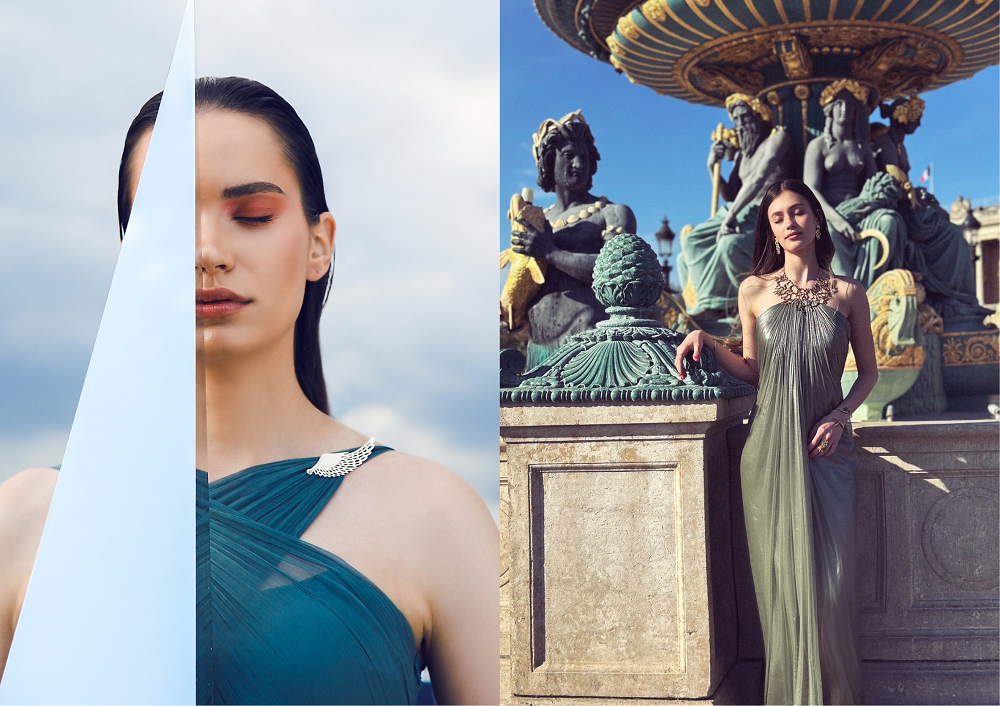
Gold plating began as a practical decision more than an aesthetic one. I used to prefer matte brass, but oxidation makes it unsustainable long-term. Durability matters when you want a garment to stay beautiful over years, not seasons. And over time, I fell in love with the clean, refined luxury that gold plating brings—you can’t really go back once you see how it elevates the final piece. And looking back now I can see how that changes the directions of my designs.
Silk represents something different: values. We’re a niche company, we don’t produce in large quantities, and I don’t want our energy to go into fabrics that aren’t worth keeping. Silk is light, natural, and lasting—and I personally prefer natural fabrics on the skin. You don’t need many clothes. You need a small number of pieces that feel good, wear beautifully, and can return with you again and again. That’s why our designs are timeless—and why the fabric has to be timeless too.
3. Your dresses are inspired by goddesses (and often nature), yet they feel modern and grounded. How do you translate ancient symbolism into something relevant for today’s woman?
Maria: I treat shape and symbolism as two separate design languages. Shape is the foundation—how the garment sits on the body, how it moves, how it holds presence. Symbols are layered more subtly, like a quiet message rather than a costume.
I never push the design too far. I stop when it still feels sensible—when it remains wearable and emotionally accessible. My belief is that a look inspired by something deeper—something you can sense beyond the outfit—gives a woman more than a look that simply “matches.” It gives her a feeling, a story, underlines a part of herself.
There’s also a Jungian philosophy behind that—archetypes, the unconscious, the symbolic language we respond to without always realizing it. But that’s an entire conversation on its own.
4. Femininity is often misunderstood or oversimplified. How do you define it at this stage of your life?
This feels like a meaningful moment to define it—especially as I’m approaching 40. To me, femininity is deeply connected to comfort: being comfortable with it, and finally appreciating what it brings.
It’s about allowing yourself to feel beautiful exactly as you are, without apology or performance. I’ve had women write to me saying there’s a real need for dresses like mine—not just because of how they look, but because of how they make you feel: feminine, soft, present. That kind of feedback is priceless.
5. Do you believe clothing can participate in healing? Have you witnessed moments where a woman’s posture, confidence, or self-perception shifted when wearing your pieces?
Yes, absolutely. I’ve heard women describe the regret of not making the effort—of choosing something generic, compromising, and then feeling the emotional difference. More than once I’ve been told, “I promised myself I won’t do that again.”
Many have said they felt a clear shift in mood when wearing an M.D.Burnette dress versus something standard, and they came back for the next one because “it’s just not the same.” Some clients buy a dress simply for that feeling of doing something for themselves—choosing something precious, feminine, delicate, inspired.
A piece can become an anchor: a reminder of how you want to feel, or who you are becoming—while you’re still on the way there.
6. On a personal level, has building this brand been part of your own therapy or self-development journey?
I wish it had been more of a structured self-development journey. Ideally, it would be the other way around: first self-development, then building a brand. That would definitely be easier—and cheaper. :))
But the truth is, perfectionism can turn self-development into an endless loop of “not ready yet.” And then you might never build anything at all. So I’ve learned to accept that a little ignorance is also a kind of blessing. Things unfold as they are meant to, and you grow inside the process—not before it.
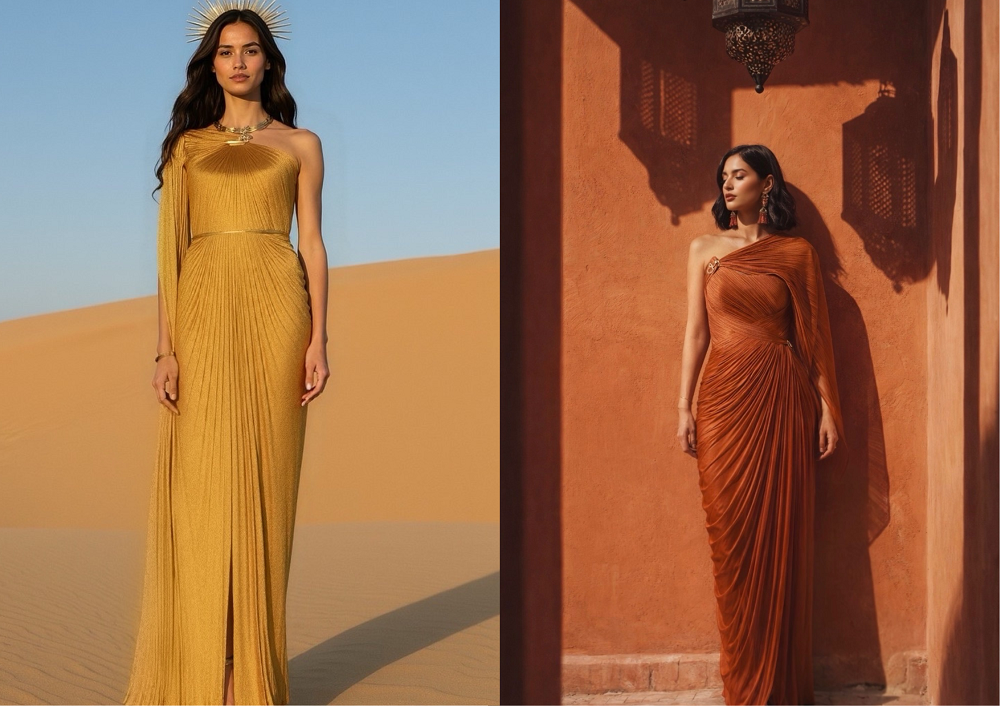
7. When you design, do you think more about aesthetics, about the tactile dialogue between silk and skin, or about the psychological state of the woman who will wear the dress?
I think about the psychological state first. I often divide my designs into “Amazons” and “Princesses,” and even during fittings I recommend silhouettes based on a woman’s personality—because the right dress isn’t just about body type, it’s about ones identity.
We also incorporate symbolism and details that I believe people choose subconsciously. A woman is often drawn to something because it reflects something she needs or recognizes in herself.
And tactility matters enormously. We make a strong effort to ensure only natural fabrics—silk or silk blends—touch the skin. Why would you have beautiful silk on the outside, and plastic against your body? Comfort is part of the look.
8. In an industry that rewards trends and speed, how do you remain loyal to depth and intention?
You stay happy inside your bubble. You ground yourself while designing, and you stop when the piece feels complete—when it feels comfortable, clear, and accessible. Depth requires slowness. And intention requires the courage to ignore noise.
9. Time for a funny one: When you’re working late in the studio, do the dresses ever feel like they have opinions about your choices?
Maria: There’s no more working late in the studio after kids… :))
But everyone calls my sewing mannequins “your assistants,” and they complain that they’re always in the way. They’re everywhere—dressed in pieces that are either works in progress or ready to be photographed. We practically have to slalom around them. They are not judgy but they are a caracter.
Florenta: Thank you, Maria. I can confirm that your dresses reveal the goddess within every woman who wears them. They feel like a second skin, and carry both strength and softness, allowing femininity to be experienced fully and naturally.

Maria D. Burnete, the designer