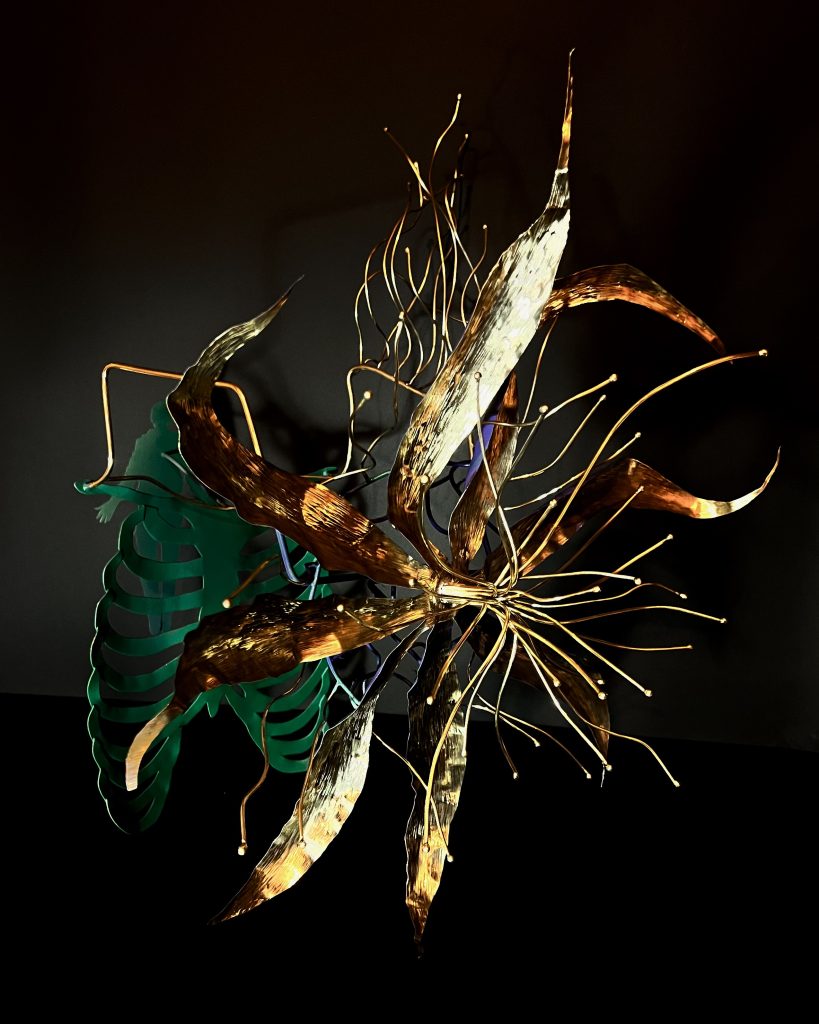
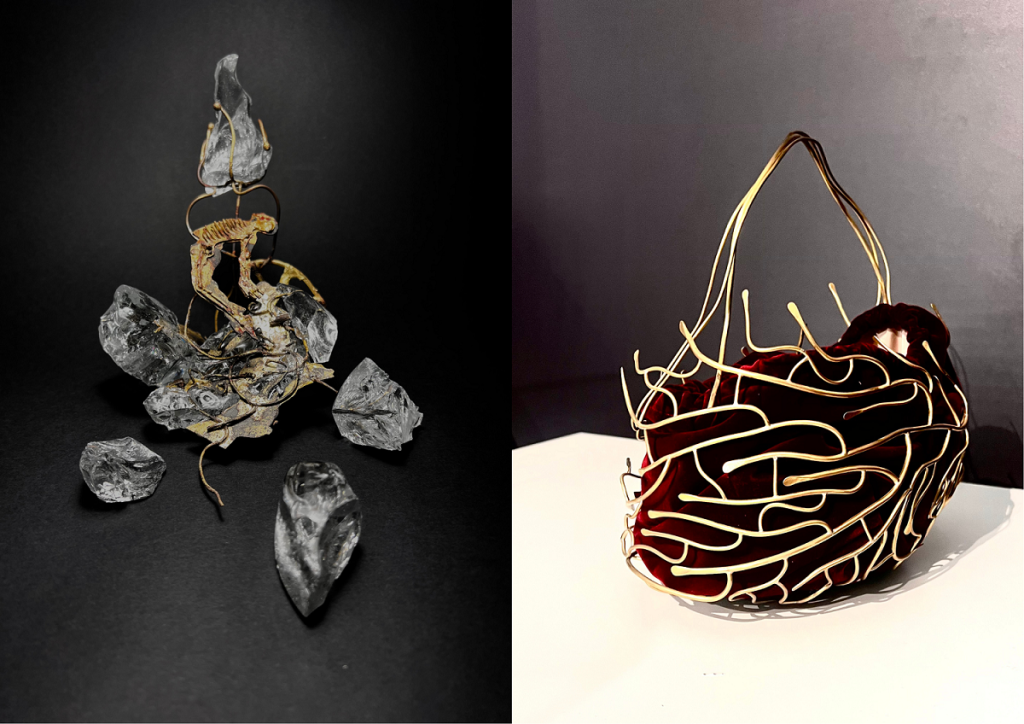
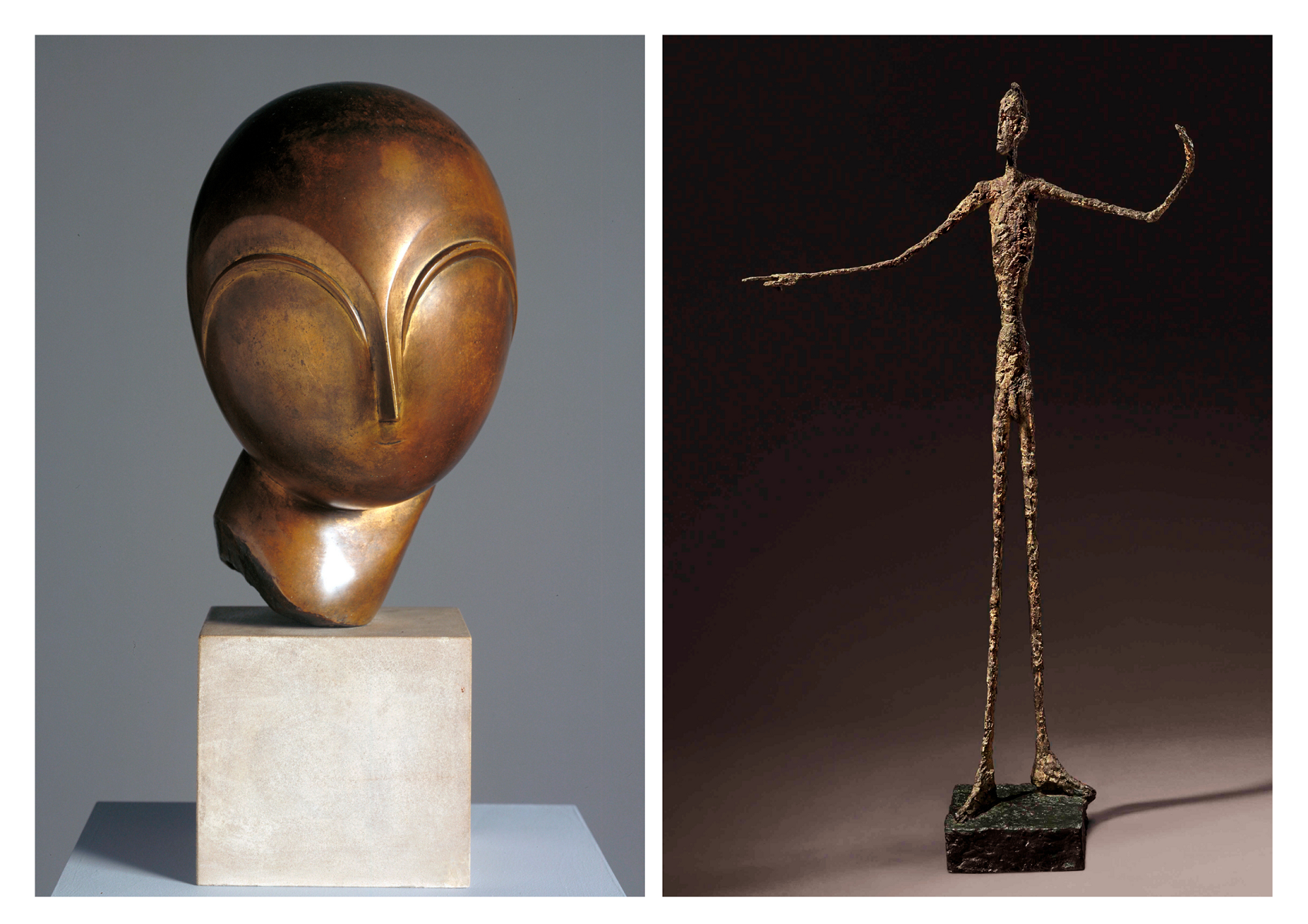
Denis Nanciu’s art comes from intuition and emotion rather than rules or tradition. His sculptures and jewelry carry both fragility and strength, shaping metal and other materials to express feelings and personal experiences. Each piece leaves space for interpretation, inviting the viewer to engage and reflect. Working in Bucharest, he experiments across techniques, embracing surprises and the unexpected in his creative process.
In this interview, he talks about his approach, the emotions behind his work, and the ideas that guide his practice.
“True emotions manifest in the moments of creation”
1. What was the moment or experience that first pushed you toward art?
Denis Nanciu: There was not a specific moment that pushed me toward art, but rather several. I worked instinctively, and some people from my childhood noticed that I had an inclination toward art. All the moments before I decided to follow this path contributed to my attending an art high school and later, an art university.
2. How would you describe your work to someone who has never seen it before?
Denis: Very briefly, I would say that I create contemporary art. I do not make classical or academic art; I use my imagination and intuition to express my own vision. I do not seek beauty in my works, but rather express what I feel.
3. In your practice, fragility and strength coexist in metal. How does this tension reflect in the stories your objects tell?
The stories behind my metal works, and not only metal, stem from a vulnerability that I embrace through my pieces. They are personal stories about my feelings and experiences. I consider it a sign of strength and courage to express these states and then share them with people, both online and in art galleries.
4. Do you see your work as a form of art therapy, for yourself or for the person interacting with the piece? How does creating or wearing your sculptures affect the emotions?
Considering that I work with my own emotions, I see art as a form of therapy for myself. What I cannot or do not want to express in words, I convey through my works.
True emotions manifest in the moments of creation. Within me, conflicts arise about how direct or how cryptic the message should be. I like to leave room for interpretation.
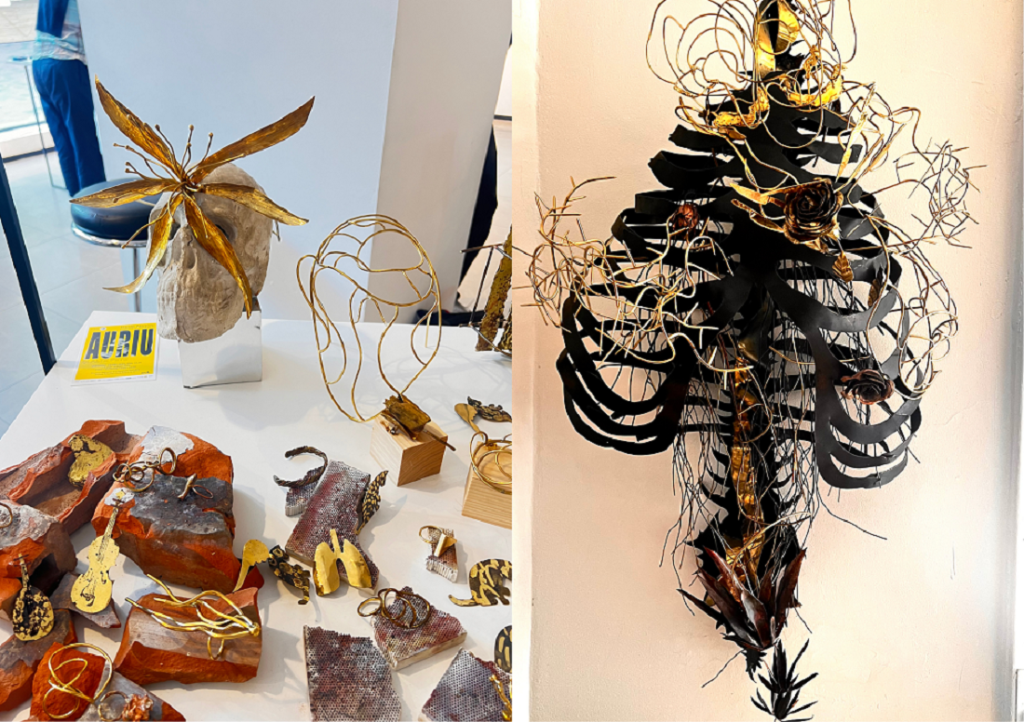
“I explore certain themes through multiple techniques: drawing, painting, sculpture, and jewelry”
5. Can creating art be a form of self-healing, in general? Have you experienced moments where your process became a personal exploration of emotions or identity?
Yes, I believe that art can be a form of self-healing. In my case, many works stem from personal emotions and vulnerabilities. Through the process of creating, I explore feelings that I sometimes cannot express in words, and the artistic process becomes a personal exploration.
6. Your work blurs the line between functional objects and art. How do you decide when something should remain purely sculptural versus serving a practical purpose?
From the beginning, I decide whether I want to make a sculpture or a functional object. As a multidisciplinary artist, I try to explore certain themes through multiple techniques: drawing, painting, sculpture, and jewelry.
The area of expression is different, and it is precisely this diversity that interests me: to express the same theme through different techniques.
7. Have you ever been surprised by the way someone interprets or connects with your work, in a way you didn’t anticipate?
Yes, I am often surprised by the way people interpret my works. However, this is normal, because I also interpret the works of other artists based on how they resonate with me and my personal experience.

Denis Nanciu
“I consider all the mistakes I encounter as happy accidents”
8. How do you approach mistakes or “happy accidents” in your creative process? Have they ever led to unexpected breakthroughs?
I consider all the mistakes I encounter as happy accidents. I work intuitively and create unique pieces. Some experiments lead to unexpected discoveries.
This is where the value of an artist becomes visible: transforming a mistake into an intention and ending up with a very strong work.
9. Do you find that certain materials inspire specific emotions or ideas? For example, does brass evoke something different than wire or other metals?
Brass, compared to other metals, evokes a human warmth for me. It is the metal I have chosen as my main area of expression.
I am still discovering it and trying to take it into an ultra-contemporary zone, both in jewelry and sculpture. Each metal has different properties, and you can achieve different effects and textures depending on what you aim to express.
10. Is there a question you’ve always wanted to be asked, or one you’re still looking for the answer to?
Denis Nanciu: I am still finding myself as an artist, so the question I am still looking for an answer to would be: “What kind of artist am I?” Being still an emerging artist and adapting to contemporary art, the question I have wished to be asked would be: “What is not seen?”
Artgasmic: Thank you, Denis, for letting us witness the quiet strength in your work, for sharing the moments where intuition meets material, and for reminding us that art is not just seen, but felt.