
Learning to play a musical instrument has an underrated effect on children’s development. It is often viewed mainly as an extracurricular activity, but in reality it influences several areas at once, including how children think, focus, learn, and respond to challenges. It also involves physical coordination and emotional engagement, not just mental processing. None of this appears instantly or in an obvious way, but develops gradually through regular practice, where children are constantly listening, adjusting, and repeating actions until they improve.
Below are 10 ways in which learning a musical instrument can support a child’s development.
Early exposure to music can improve children’s ability to learn and remember information by activating different areas of brain development. While learning an instrument, they work continuously with patterns, sequences, and repetition that must be understood and reproduced. This repeated practice helps the brain organize information more efficiently, making it easier to store and recall it over time.
Playing music is a creative process that helps develop a child’s imagination and expression. While teachers can guide a piece with notes and suggestions, they cannot define exactly how it should be performed in every detail. That responsibility gradually shifts to the student, who begins to shape the music in their own way. With every practice session, children add subtle elements of themselves into what they play, turning creativity into something practical and personal.
Playing an instrument is one of the activities where patience is learned through experience rather than explanation. Children quickly realize that improvement takes time and that repeated effort is necessary before results become visible. As they continue practicing, they begin to associate progress with persistence. Music lessons also naturally introduce goal-setting, from short-term targets like learning a specific passage to longer-term goals such as completing a full piece.
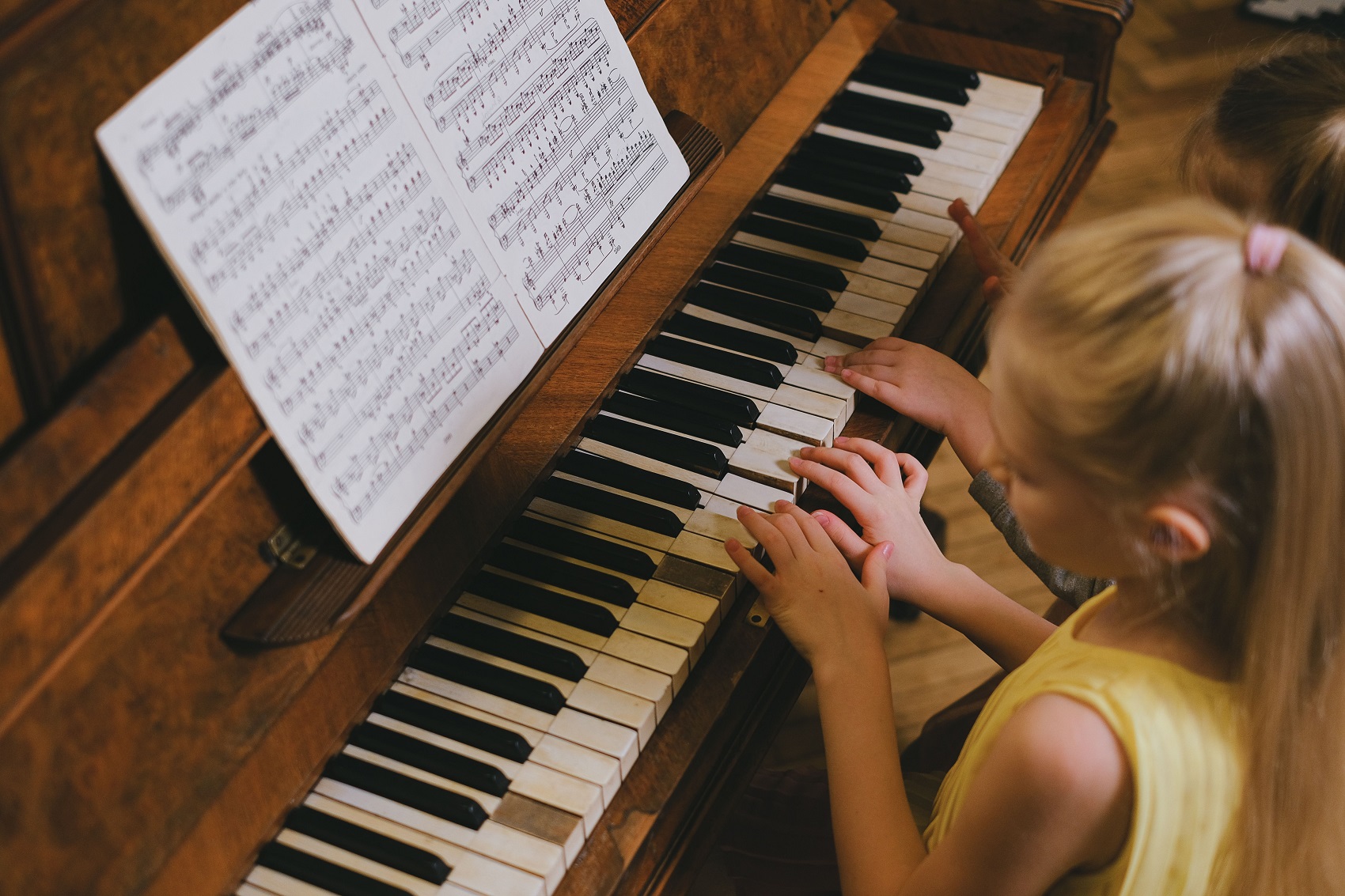
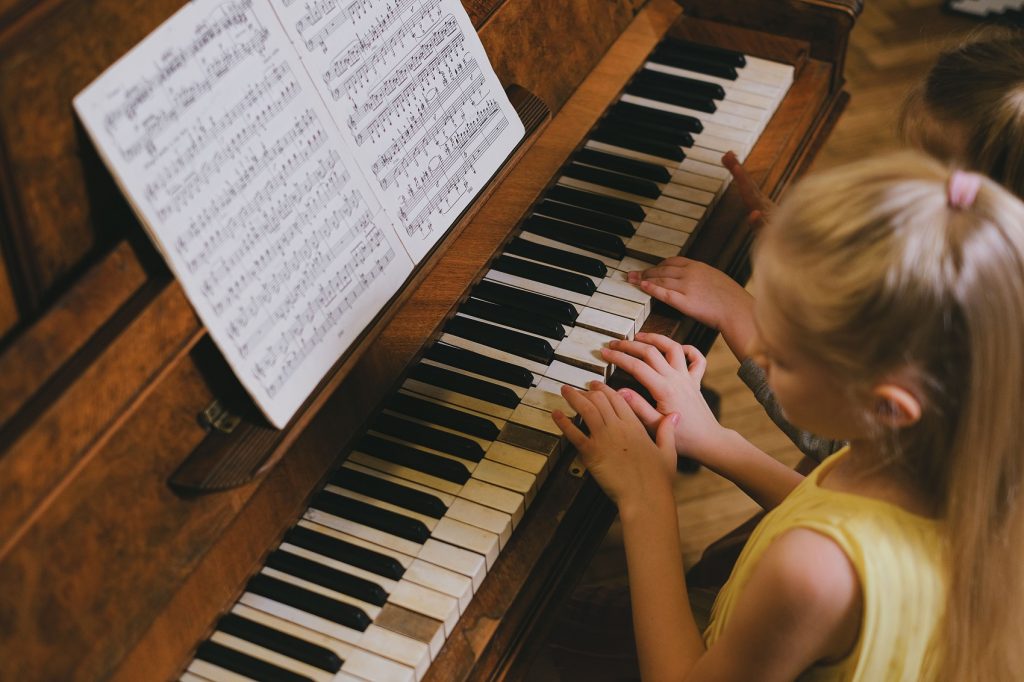
Playing a musical instrument requires the brain and body to work together in a fast and controlled way. During lessons, children must read music while simultaneously translating those notes into precise physical movements. This constant connection between seeing, thinking, and doing helps improve coordination over time. Instruments like the trombone make this especially clear, since producing the correct note depends on moving the slide to the exact position at the right moment.
Learning a musical instrument is not something children can master quickly, which means they must return to the same activity repeatedly over time. This steady practice gradually develops self-discipline, as they learn to continue working on something even when progress is slow.
Music also introduces structure into their daily routine. Practice needs to be balanced with school, homework, and other activities, so children slowly learn how to manage their time planning more effectively. For some children, particularly those with ADHD, this type of structured but active activity can be especially beneficial, as it supports focus in a more engaging way than passive tasks.
Music often reflects the culture and time in which it was created. Each style carries elements of the historical period it comes from, offering clues about how people lived, what they experienced, and what mattered to them. Exposing children to different genres such as classical, jazz, blues, folk, rock, or medieval music gives them a way to indirectly explore different cultures and moments in history.
In many music education settings, students are also taught about the background of the pieces they play, including when they were written and what influenced their creation. They are often encouraged to imagine a narrative behind the music as they perform it. This can naturally spark curiosity, leading some children to look deeper into the culture or historical period connected to the piece they are learning.
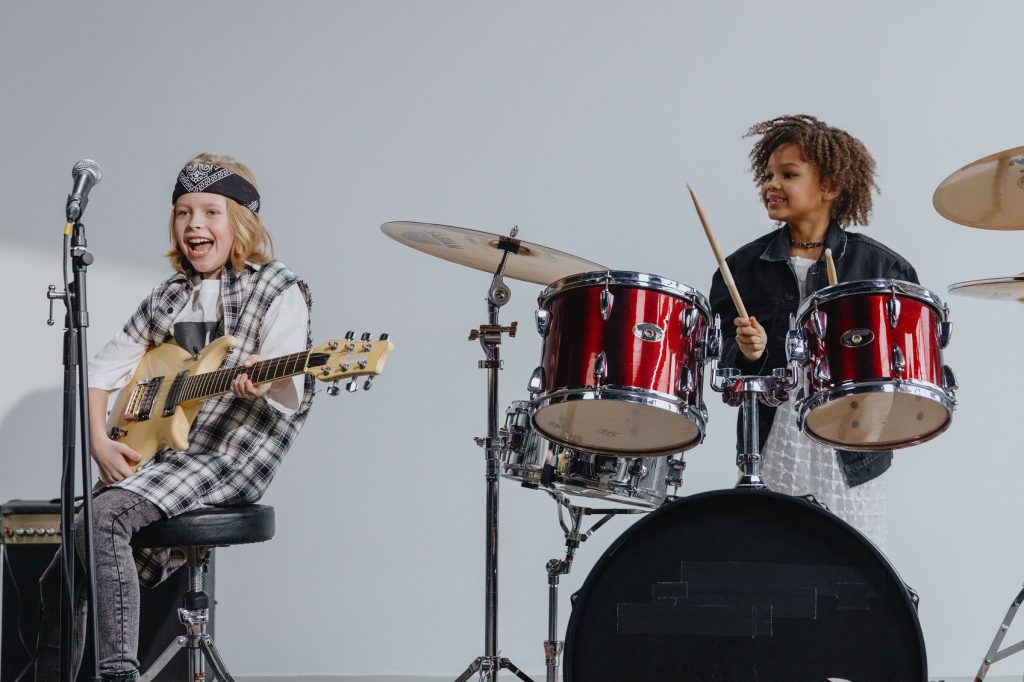
Playing an instrument is not only good for a child’s development, it also helps them grow socially. Being part of a band or group encourages interaction with other children, often leading to friendships with people from different backgrounds. It creates natural situations where cooperation and shared responsibility are needed.
Group music practice also builds teamwork and leadership skills. Children learn to listen to others, match their playing with the group, and understand the importance of working toward a common result instead of acting alone. Over time, this also helps them become more patient and considerate with others. It also teaches basic social skills like communication, collaboration, and respect for group effort.
Learning an instrument trains children to become more attentive to sound in a detailed and active way. They are not only following their teacher’s directions, but also constantly interpreting what they hear while playing, from timing and tone to subtle differences in sound quality. This requires them to stay mentally engaged and responsive throughout practice.
Over time, this habit of careful listening strengthens their ability to focus and hold attention for longer periods, both in music and in other situations where concentration is needed.
Learning to play an instrument helps children become more comfortable with expressing themselves. As they gradually improve, they often move from playing only in private practice to performing in front of others, starting with parents or their music teacher, and later in front of classmates or larger audiences. These moments of performance help them get used to being seen while doing something they’ve learned through effort. Over time, this experience can strengthen their confidence, not only in music, but also in other situations where they need to present their abilities outside an academic setting.
Many studies suggest a link between musical training and academic performance in both children and adults. Learning to play an instrument activates brain cells, improving functions such as memory and abstract thinking, which are important for subjects like mathematics and science.
Music, in general, helps create stability and equilibrium in a child’s life. It also provides an outlet for creativity and emotions, supporting self-expression and helping children process what they feel in a healthy manner. It is more than a skill; it is a lifelong companion that shapes how children think, feel, and grow.