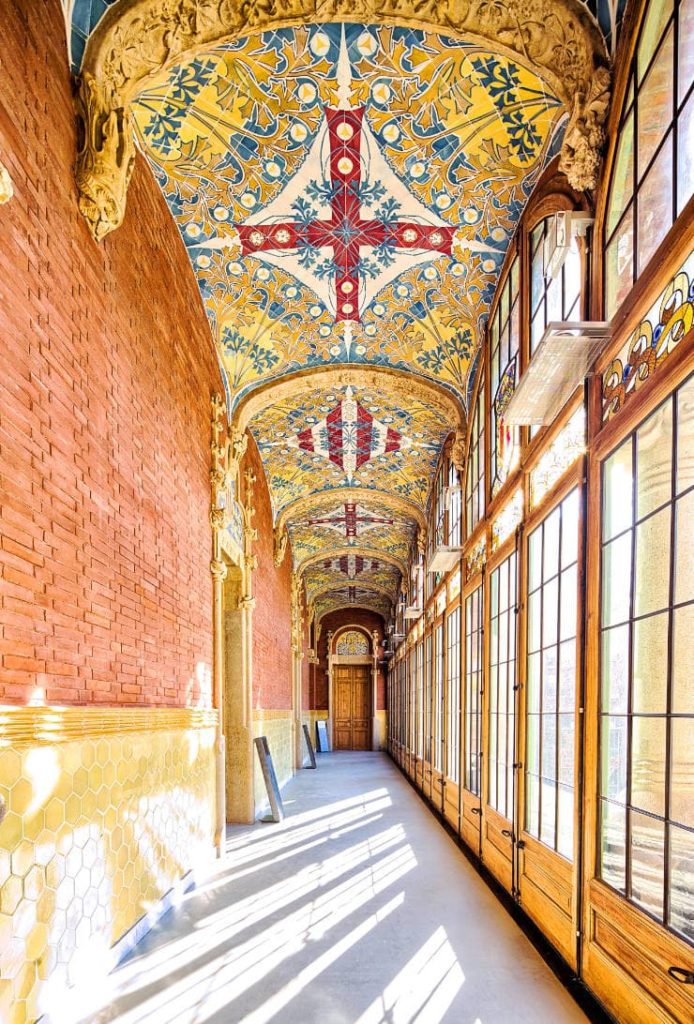
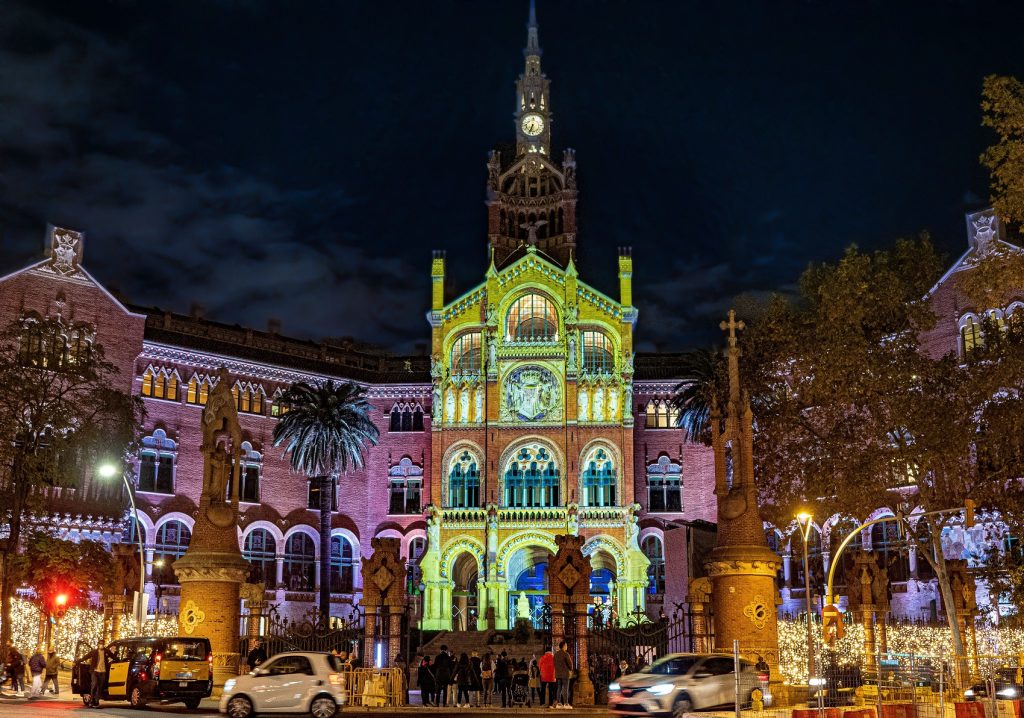


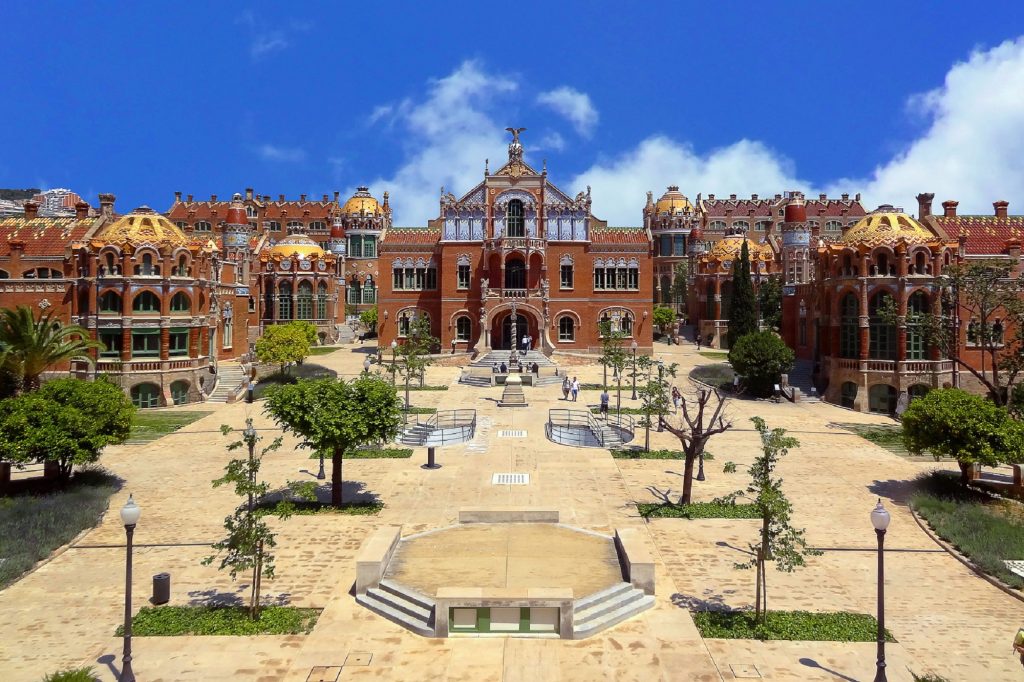
Hospital de Sant Pau was never meant to feel like a traditional hospital. When architect Lluís Domènech i Montaner began designing it in the early 1900s, he imagined something completely different from the medical institutions of his time. Instead of a single massive building filled with long corridors and shared wards, he broke everything into separate pavilions, surrounded them with gardens, and filled them with light. Stained glass, mosaics, ceramic details everywhere you look. Nothing accidental.
Construction started in 1902 and stretched across almost three decades. The complex grew slowly into what feels more like a small city than a hospital. Twelve pavilions, each with its own purpose, all connected through underground passages so movement between them stayed hidden from the surface. Back then, hospitals were built for efficiency, not experience.
Sant Pau didn’t follow that logic. It feels closer to a place designed around how people actually feel when they are sick: sensitive to light, to noise, to space. Air and greenery weren’t decorative choices. They were part of how the place worked. It is one of the clearest expressions of Catalan Modernism, but also something more simple than that. An attempt to make care environments less harsh.
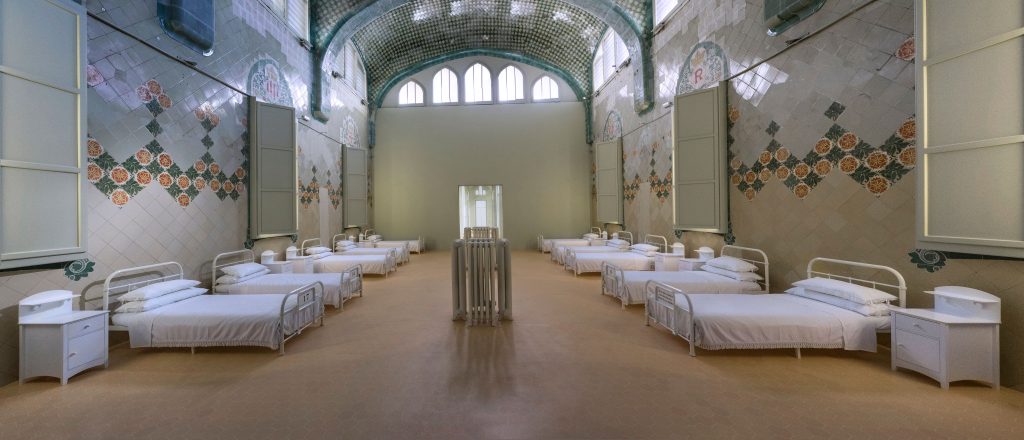
PH: Pere Romero Alonso
Lluís Domènech i Montaner died in 1923, long before the project was finished. His son, Pere Domènech i Roura, took over and completed the work. The hospital stayed active for decades, quietly doing what it was built to do, until services moved in 2009 to a new facility nearby. After that came restoration, and eventually, in 2014, the site reopened in a completely different role.
Today, the Recinte Modernista de Sant Pau is a UNESCO World Heritage Site. It sits just a short walk from the Sagrada Família, although most people never expect something like this to be there and often pass it without stopping. It still holds the same quiet idea at its core: that the places we build to treat people are never neutral. They either add to the weight of illness, or take something of it away.