

Years ago, while working in Madrid on a fashion editorial, I met Fernando Bosch. His photographs from that shoot stayed in my portfolio for over a decade, hinting at the depth of his vision long before I fully understood it. Over the years, he photographed models and celebrities for L’Officiel, Elle, MAC, Harper’s Bazaar, Revlon, and others, while cultivating a parallel practice as an abstract painter exploring the inner worlds images can only hint at.
Fernando moves between two worlds: fashion photography, where beauty and identity are constructed, and painting, where the invisible becomes visible. His camera transforms reality rather than documents it, and his abstraction arises from letting the material speak.
In this interview, he opens the doors to his universe, revealing the rituals, risks, and revelations behind the images and paintings that define him. “Don’t rush. Don’t explain. Don’t settle. And above all: don’t let anyone tell you what you do isn’t art,” he advises his younger self—and all of us seeking authenticity.
1. Do you remember the very first image — whether a painting, a photograph, or even a scene from life — that made you stop and think, “this is art”? What mattered more: the tools you had in your hands, or the feelings you were trying to express? Fashion photography is often about the outer world — beauty, image, identity. Painting feels like the inner world. At the very beginning of your journey, which world spoke to you first?
Fernando Bosch: The first image that truly pierced me wasn’t a photograph or a painting, it was a volcanic landscape in the Canary Islands, where I was born. I remember the silence of the lava, the weight of time in the stone. There was no aesthetic intention, just presence. That’s when I understood that art doesn’t always need to be made, it can simply be revealed. At the beginning, the tools didn’t matter. Not the camera, not the brush. What mattered was the need to translate a vibration, a tension. Fashion photography led me to look outward, to construct beauty, identity, surface. But what moved me first was what couldn’t be seen: the fracture, the waiting, the pulse beneath. That inner world claimed me early on, even if I didn’t know how to listen yet.

2. Were you ever discouraged at the start, and if so, what kept you moving forward?
Fernando: Many times. Especially when I felt that what I was doing didn’t fit into any known language. What kept me going was ritual, repetition, fracture, return. And the intuition that if I listened closely enough, the material would respond. Also, the body kept me going: the act of doing, even without certainty.
3. Growing up in Spain, what role did culture, color, or even the streets of Madrid play in shaping your eye as an artist?
Madrid taught me to look at chaos with affection. Its layers, its noise, its contradictions. But it was in the margins, in Torrelodones, in the silences between travels, where I learned to compose from gravity, not from surface. Spanish culture, with its emotional intensity and its relationship to death, marked me deeply. There’s something profoundly ritualistic in how we live the everyday, and that’s present in my painting.
4. When you first picked up a camera, did you feel like you were documenting reality — or already transforming it?
I was transforming it, though I didn’t know it at the time. The camera was a ritual mirror, not a recording device. Every frame was a way of saying: “this isn’t what you see, it’s what vibrates underneath.” Even in fashion, I searched for that momento when the image breaks, when the pose collapses and something reappears.

5. You photographed models and celebrities for big brands and magazines: L’Officiel, Elle, MAC, Kevin Murphy, Glamour. What other names am I missing?
Along side those, I’ve worked with Harper’s Bazaar, Cosmopolitan, Revlon, and some independent campaigns that marked me more than the big names. What matters isn’t the brand — it’s the shared gesture, the intimacy created on set, the possibility that something escapes the script.
6. If one day you could only show the world three of your photographs as your legacy, which would you choose — and what meaning do they hold for you personally, beyond their visual beauty? Can you show them to us?
It’s hard to choose, but perhaps:
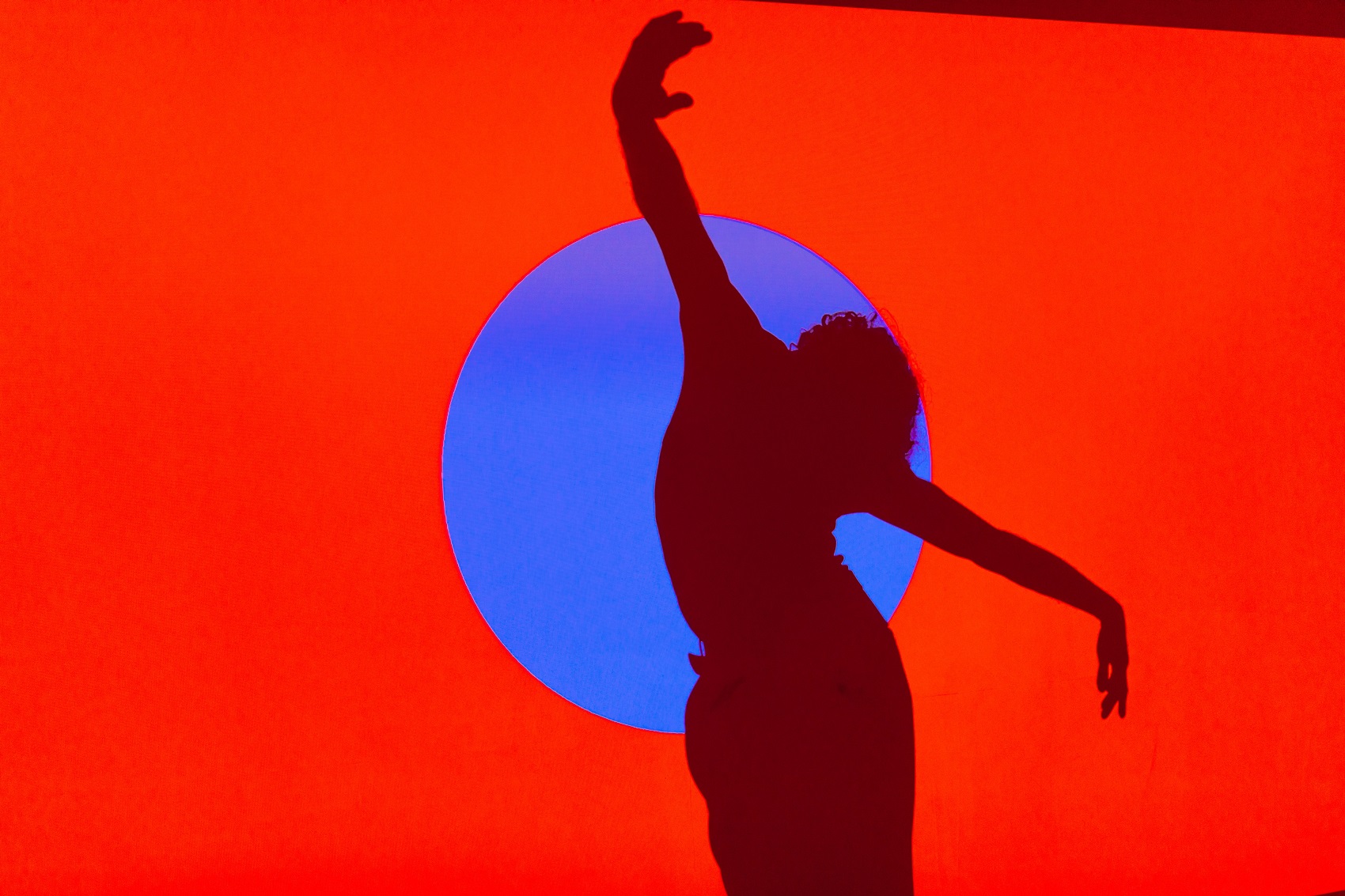
– A shadowed image of a model, where the body disappears and only the trace remains.
– A faceless portrait, just texture and light.
– A volcanic stone captured as if it were skin.
They’re not the most popular, but they’re the ones that listened to me. They’re not documents — they’re thresholds.

7. Do you like social media? Do algorithms and ‘likes’ ever make you alter an image or a painting to suit an audience?
I use social media, but I don’t inhabit it. I don’t alter my work for likes, though the temptation exists. I prefer my paintings and images to breathe outside the algorithmic loop. I’m more interested in intímate encounters than mass visibility.
8. Was there a specific moment where abstraction “clicked” for you — where it felt like a natural language, not just an experiment?
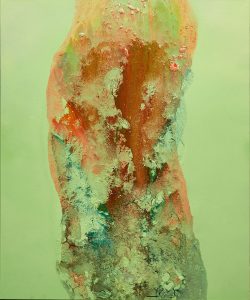
Yes. When I stopped painting with my hand and started letting the material settle on its own. When I understood that the deepest gesture is the one that isn’t forced. Abstraction wasn’t an aesthetic choice, it was a physical necessity. A language that doesn’t aim to represent, but to resonate.
9. Did painting come to you as an escape from the demands of commercial / fashion work, or as a continuation of it in another form?
As a parallel ritual. In trading, as in painting, there are cycles, tension, waiting. I don’t escape, I translate. Painting brings me back to the body, to error, to accident. It’s a way of listening to what the algorithm can’t say.


10. If you could revisit yourself as a young artist, before the campaigns, before the galleries, what advice would you give to that version of Fernando?
Don’t rush. Don’t explain. Don’t settle. And above all: don’t let anyone tell you what you do isn’t art. Coherence isn’t found — it’s built. And sometimes, it’s fractured.
11. Where can people step into your universe, to see your paintings and experience them beyond the screen?
At Tamara Kreisler Gallery in Madrid. And also in my studio, if they come with time and respect. The screen isn’t enough, you have to feel the weight, the silence, the fracture. Painting isn’t something you look at, it’s something you inhabit.
12. If you could ask yourself one question in this interview, the one nobody ever asks you… what would it be?
Fernando: Where is the boundary between gesture and algorithm? And I still don’t have an answer.
Artgasmic: Thank you for inspiring us, Fernando. Let’s see if our readers have the answer to this great question! Feel free to comment!