

Some emotions do not arrive with sentences. They show up as a tight chest, a restless body, or a sense that something is off without knowing exactly what. In those moments, being asked to explain how you feel can make things worse, not better. Art therapy begins right there, at the point where language stops working. It does not ask for answers. It offers a surface, a color, and the freedom to respond honestly.
Art therapy is a recognized mental health practice that uses creative expression to support emotional, psychological, and physical well-being. It is not about producing art for display but about making internal experience tangible and accessible. Through drawing, painting, and intuitive creation, people can explore emotions that are otherwise difficult to name.
Painting to music is one of the most powerful art therapy practices because it transforms something we hear into something we can see and touch. Music carries emotion in ways that words cannot, and translating that emotion into color and movement allows feelings to be expressed directly, bypassing the mind’s tendency to overthink. This exercise opens a channel between sensory experience and creative expression, giving form to emotions that are otherwise difficult to articulate. To practice, choose a piece of music that resonates with your current mood or the energy you want to explore. Let your hand follow the rhythm and intensity naturally, translating sound into brushstrokes, lines, and washes of color. Observing how your movements and colors change with different songs can reveal the fluidity of your feelings, providing insight into emotional shifts. By making the invisible visible, this exercise offers both release and understanding, helping you connect with your inner world in a way that words alone cannot achieve.
The Transformation Drawing is a deeply meaningful exercise because it helps you visualize change and growth in a tangible way. Challenges, fears, or difficult emotions often feel heavy and unmovable, and this practice provides a safe space to see them shift. You begin by representing a current struggle or negative feeling on one side of the page, using colors, shapes, or textures that reflect how it feels: dark, dense, jagged, or chaotic. On the other side, you illustrate the same feeling transformed, resolved, or softened, using brighter, warmer, and more fluid tones. The space in between becomes a bridge, showing the path from difficulty toward healing and balance. Engaging in this process allows you to explore your emotions with curiosity rather than judgment, revealing potential solutions, new perspectives, and a sense of progress. By making inner transformation visible, this exercise offers insight, release, and a gentle way to acknowledge personal growth that words alone cannot convey.
The Mood Mandala is a calming and centering practice because it transforms scattered or overwhelming emotions into something visible and contained. The circular shape acts as a natural frame, offering a sense of structure while inviting freedom of expression. To begin, you can draw a simple circle and choose colors that reflect your current feelings or the emotional state you want to explore. Filling the circle with patterns, shapes, or lines allows the hand to move intuitively, giving form to emotions that are hard to put into words. As the design expands from the center outward, the repetitive motion creates a rhythm that calms the mind and helps focus attention. Looking at the completed mandala can reveal insights into emotional balance, highlighting contrasts, harmonies, or areas that feel unresolved. By turning inner experience into a visual pattern, this exercise provides both soothing presence and a deeper understanding of your emotional landscape.
The Emotional Weather Report is a powerful way to observe and organize feelings that feel vast, unpredictable, or overwhelming. Emotions often shift like the sky, changing in intensity and character without warning, and this exercise gives them a visible form that is easier to understand. To practice, imagine dividing a page into sections, each representing a different emotion you are experiencing. Then use colors, shapes, and imagery to translate those feelings — stress might appear as stormy clouds, sadness as mist or rain, and joy as sunlight over a calm landscape. Seeing these emotional “climates” laid out on the page allows you to recognize which states dominate and which are more fleeting. This externalization creates psychological space, letting you observe your feelings without being consumed by them. By turning abstract emotions into visual patterns, the Emotional Weather Report provides clarity, insight, and a gentle sense of control over your inner world.
Color Your Body Map helps you connect with the sensations your body holds and the emotions tied to them. Often, feelings are experienced physically before they reach words, and this exercise allows you to see them clearly. Begin by drawing a simple outline of your body and then take a moment to scan from head to toe, noticing areas of tension, warmth, heaviness, or lightness. Translate these sensations into color and form, letting intuition guide your choices: a tight shoulder might become a bold, dark shape, while a fluttering stomach could emerge as swirling yellow and green. This visual translation creates a direct link between body and emotion, allowing you to understand where stress, anxiety, or joy is held. By externalizing these internal sensations, the practice fosters self-awareness, emotional regulation, and a compassionate attention to your own experience.

PH: RISE – The Children’s Society
The Abstract Self-Portrait is a deeply personal practice that focuses on expressing your inner world rather than your outward appearance. It allows you to explore identity, mood, and energy through color, shape, and texture, revealing aspects of yourself that words cannot capture. Begin by tuning into your current feelings and your overall sense of self, then translate these sensations onto the page using colors and forms that feel true to your experience. Bold reds and sharp lines might reflect intensity and passion, while soft blues and flowing shapes could represent calmness and introspection. The resulting artwork becomes a mirror of your inner state, highlighting emotional patterns and personal strengths. This exercise encourages self-discovery, emotional awareness, and acceptance, providing insight into your personality, your challenges, and the subtle currents of your emotional life.

PH: Karola G
The Non-Dominant Hand Exercise is a powerful way to access emotions and creativity that are often hidden beneath habitual thought patterns. Using the hand you do not normally write or draw with bypasses the critical, logical side of the brain, allowing raw, spontaneous expression to emerge. Begin by holding your non-dominant hand on the brush or pen and let it move freely across the page, responding to whatever arises in the moment. The marks may feel awkward, childlike, or messy, and that is exactly the point, they reveal feelings and ideas that are normally suppressed. This practice encourages honesty, intuition, and a deeper connection to your inner world. By observing the shapes, colors, and energy produced by your non-dominant hand, you can gain insight into unconscious emotions, release tension, and cultivate a sense of freedom in creative expression that is both therapeutic and illuminating.
Gratitude Art Journaling invites you to explore thankfulness in a way that engages both creativity and reflection. Rather than simply listing things you are grateful for, this practice encourages you to see, feel, and express gratitude through color, shape, and composition. Open a journal and allow yourself to combine drawings, colors, textures, and words that represent the people, experiences, and moments that bring meaning to your life. You might illustrate a memory that brings warmth, paint abstract shapes that capture the essence of joy, or write phrases that honor support, love, or personal growth. The act of creating in a visual, intuitive way reinforces awareness of positivity and presence, helping emotions of appreciation move from abstract thought into something tangible. Over time, these pages become a personal collection of visual reminders that foster resilience, calm, and emotional balance.
Mask making is a deeply expressive art therapy practice because it gives shape to the aspects of self that are hard to speak aloud. In many cultures masks have long been used to represent identity, spirit, protection, and transformation, and in therapy this symbolic power becomes personal and psychological. Creating a mask invites you to explore different parts of who you are, the face you show to the world, the side that hides pain, or the inner qualities you are still discovering. The process begins with selecting or forming a basic mask shape, using materials that feel inviting, whether papier‑mâché, cardboard, clay, or other tactile media. As you add colors, textures, and embellishments, your choices become a visual language for emotions and experiences that are difficult to express in words. Some people paint one side to reflect how they present themselves outwardly and the other to show hidden feelings or inner conflicts, offering insight into how identity and emotion are experienced differently inside and out. Throughout creation, you may notice shifts in your attention, breath, and emotional tone as thoughts and feelings take form. Wearing or gently moving with your mask can deepen this experience, helping you connect with the expression you have shaped and consider what it reveals about your inner world. Mask making can support emotional regulation, offer clarity around how you relate to yourself and others, and create a space where complex feelings become visible and meaningful.
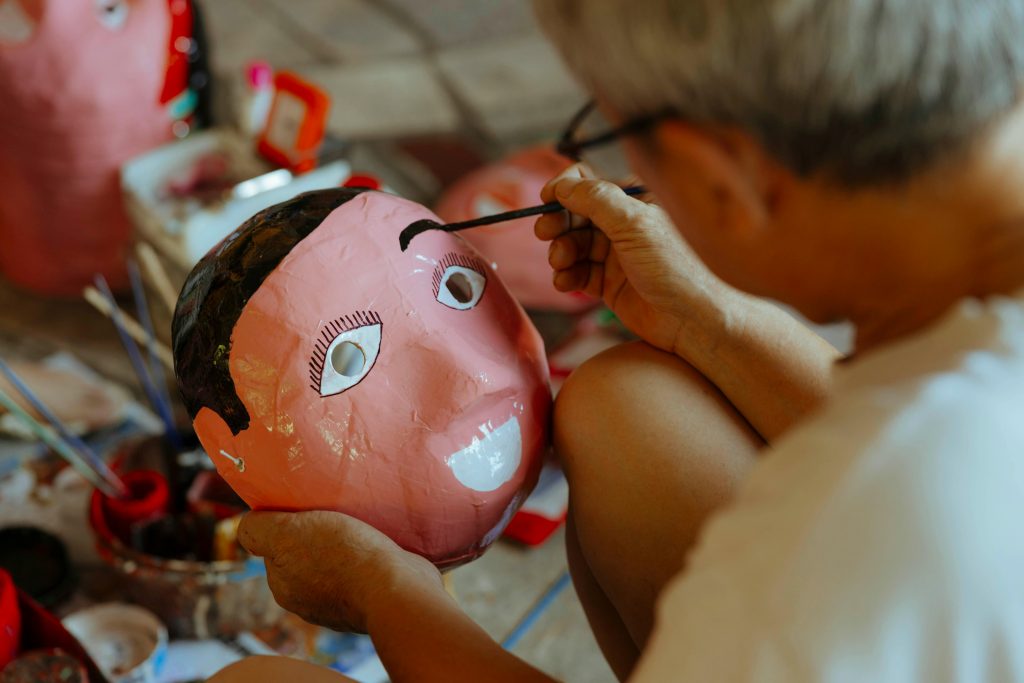
PH: Hong Son
Clay sculpting is a grounding art therapy practice that connects emotion with touch. Working with clay lets you feel, shape, and release tension through your hands, giving form to feelings that are hard to express in words. You might shape a figure, abstract form, or simply explore the texture, noticing how your body and emotions respond. The resistance, pliability, and movement of clay invite presence and mindfulness, helping to calm the mind and anchor awareness in sensation. The forms you create can reveal inner patterns, offering insight, emotional release, and a deeper connection between feeling and physical expression.

PH: Gabby K
Intuitive Watercolor Washes are a gentle and immersive way to connect with your emotions while surrendering control. The fluid nature of watercolor allows feelings to flow freely across the page, creating patterns and blends that reflect your inner state. To practice, wet a sheet of paper and choose colors that intuitively call to you, then let the pigment spread naturally without trying to direct it. Tilt the paper, watch the colors merge, and observe the shapes that emerge. The unpredictability of this process mirrors the natural movement of emotions and encourages acceptance of what arises. By engaging with color in this open, non-judgmental way, you cultivate mindfulness, release tension, and discover insights about your emotional landscape. This exercise teaches that beauty, clarity, and understanding can arise without force, simply by allowing yourself to respond honestly to the moment.
Continuous Line Drawing is a practice that encourages presence, flow, and acceptance by allowing your hand to move across the page without interruption. It gently interrupts perfectionism and self-criticism, giving your inner state room to emerge naturally. To begin, select an object, scene, or feeling to represent, and allow your pen or brush to follow your eye without lifting it from the paper. The resulting lines may overlap, tangle, or take unexpected directions, creating forms that feel spontaneous and authentic. Afterward, adding color to the shapes can highlight areas of focus, energy, or emotion. This exercise strengthens the connection between mind, body, and eye, fostering mindfulness, self-acceptance, and insight into patterns in your thoughts and feelings. By letting the movement guide the outcome rather than controlling it, Continuous Line Drawing becomes a window into emotional expression and a gentle form of meditation.
The Fragment Box is a practice designed to help manage scattered thoughts and overwhelming emotions by giving them structure and containment. When worries or unresolved feelings feel chaotic, this exercise allows you to externalize them in a safe, tangible way. You begin by representing each concern on a small piece of paper using colors, shapes, or words that reflect its weight and intensity. Then, create or imagine a box to hold these fragments, a space that symbolizes safety and control. Placing the worries into the box provides a psychological container, letting you acknowledge them without becoming consumed. Over time, returning to the fragments allows reflection on your concerns at your own pace. This exercise encourages mindfulness, emotional organization, and a sense of calm, showing that difficult thoughts can be held and observed rather than ignored or feared.
The Trauma Timeline is an art therapy practice that helps organize overwhelming experiences into a visual story. Key events are placed along a path or sequence, using color, shape, or imagery to represent how each moment felt. This allows you to see patterns, turning points, and emotional shifts without relying on words alone. The goal is not to relive pain but to map it in a way that brings perspective, insight, and a sense of control. Through this visual reflection, memories become clearer, emotions easier to understand, and personal growth more visible.