

Few stories have captivated the imagination quite like The Phantom of the Opera. For over a century, Gaston Leroux’s haunting tale has echoed through theatre halls, cinema screens, and the pages of readers’ hearts. It’s a story of beauty and darkness, love and loneliness, but also one that blurs the line between myth and truth. Because behind the romance and tragedy, some parts of The Phantom are not just fiction. They were real.
The story begins with Gaston Leroux’s novel, published in 1910. Inspired by real events at the Paris Opera House — strange sounds echoing in corridors, hidden passages, and mysterious disappearances, Leroux created a gothic masterpiece. Erik, the Phantom, is not just a figure of horror, but a deeply human character shaped by isolation, longing, and genius. Christine Daaé, the young soprano, faces fear, fascination, and compassion, making her journey timeless and deeply moving.

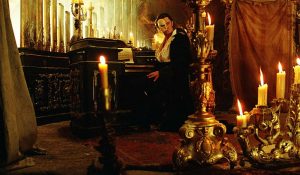
One of the most famous scenes, the crashing chandelier, was inspired by a true event. In 1896, during a live performance, a counterweight from the great chandelier fell and tragically killed a spectator. Leroux took that horrifying moment and turned it into one of literature’s most unforgettable symbols of chaos, beauty, and ruin.
And yes, the underground “lake” beneath the Paris Opera House is very real. It isn’t quite as romantic as it sounds, it’s actually a water cistern used for fire safety and to stabilize the building’s foundations, but its mysterious darkness sparked Leroux’s imagination. In his story, it became the Phantom’s hidden world, a place where pain and art coexist, where music replaces sunlight, and love turns into obsession.
Rumors of a ghost haunting the opera were also real. Staff members spoke of strange noises, flickering lights, and shadowy figures wandering the corridors at night. Leroux, ever the curious journalist, wove these tales into his fiction until the line between truth and imagination almost disappeared.
The love triangle between Erik, Christine, and Raoul might be pure invention, but its emotional truth is timeless. It speaks to something deeply human: the desire to be seen, to be loved, to be understood. That’s what keeps Phantom alive after all these years.
Over the time, the story has been adapted countless times — from Andrew Lloyd Webber’s iconic musical to multiple films. While I adore the musical, it simplifies much of the dark, psychological depth of Leroux’s original work. The novel itself is far richer, more twisted, and more intimate, revealing the Phantom as both monstrous and heartbreakingly human, and Christine as more than just a muse or love interest.
For anyone who, like me, loves diving into the real story behind the myth, I highly recommend reading Gaston Leroux’s novel. It’s darker, deeper, and far more intricate than most people realize. And if you’re curious about faithful adaptations, there’s only one movie that truly honors the source material — the very first one, the silent film from 1925. It may not sing, but it breathes Leroux’s truth: mysterious, tragic, and heartbreakingly human. Until we have a truly great movie adaptation again, we can experience the theatre play — nothing brings the story to life like the stage.
Phantom isn’t just a story about a man behind a mask, it’s about us. It’s about what we hide, what we reveal, and how love and art can save us or destroy us. Maybe that’s why it still lingers in our imagination, because every one of us, in some way, wears a mask and dreams of being seen beneath it.
After all … behind every mask, there’s a melody.