

Art can be a mirror of what we see, but it can also be a window into what we feel and believe. Spiritualist art is that rare bridge between the visible and the invisible, an artistic practice born from the belief that the spirit world can speak, guide, and even create through human hands. Also called Spirit Art, Mediumistic Art, or Psychic Painting, this movement emerged alongside the rise of the Spiritualism belief system in the mid nineteenth century, when communication with spirits, séances, and mediumship captured the imaginations of people in Europe and North America. Rather than serving only as decoration or representation, Spiritualist art was created to reveal another realm, one where artists were not simply makers of images, but interpreters of unseen experience.
Spiritualist art defies simple categorization. Some works are abstract, others symbolic or trance inspired. What unites them is the belief that creativity can come from inner experience, intuition, or what practitioners understood as communication with spiritual presences. Instead of painting only what the eyes see, Spiritualist artists aimed to express something felt, something beyond ordinary perception.
Some of the most striking examples of Spiritualist art emerged in the late nineteenth and early twentieth centuries. Georgiana Houghton, an English medium active in the 1860s and 1870s, produced intricate watercolors she referred to as spirit drawings. She claimed these compositions were guided by spirits rather than by conscious artistic decision. Her luminous works, filled with swirls of color and symbolic forms, looked unlike anything exhibited in her time and challenged contemporary assumptions about artistic inspiration and control.
A Swedish painter named Hilma af Klint created monumental abstract works decades before abstraction became widely recognized in European art. Her series of paintings known as Paintings for the Temple were inspired by what she described as spiritual communication with entities she called the High Ones. These works combine geometric form, symbolic color, and a sense of cosmic order, suggesting evolution of the self and of spiritual consciousness.

Hilma af Klint
n France, Augustin Lesage, a coal miner who began painting after spiritual guidance reportedly led him to the practice, produced detailed compositions with repeating patterns and complex structures. Lesage believed he was guided by the spirits of the departed, including his own sister, and his works reflect a sense of directive rather than personal invention.
Other figures such as Laure Pigeon, a French medium who created hundreds of drawings during trance sessions, further illustrate the diversity of Spiritualist practice. Her work often combined abstract shapes, symbolic forms, and inscriptions that seemed to emerge without deliberate planning. These drawings are now regarded as part of outsider or intuitive art collections, demonstrating how Spiritualist expression reached deep into personal experience and personal symbolism.
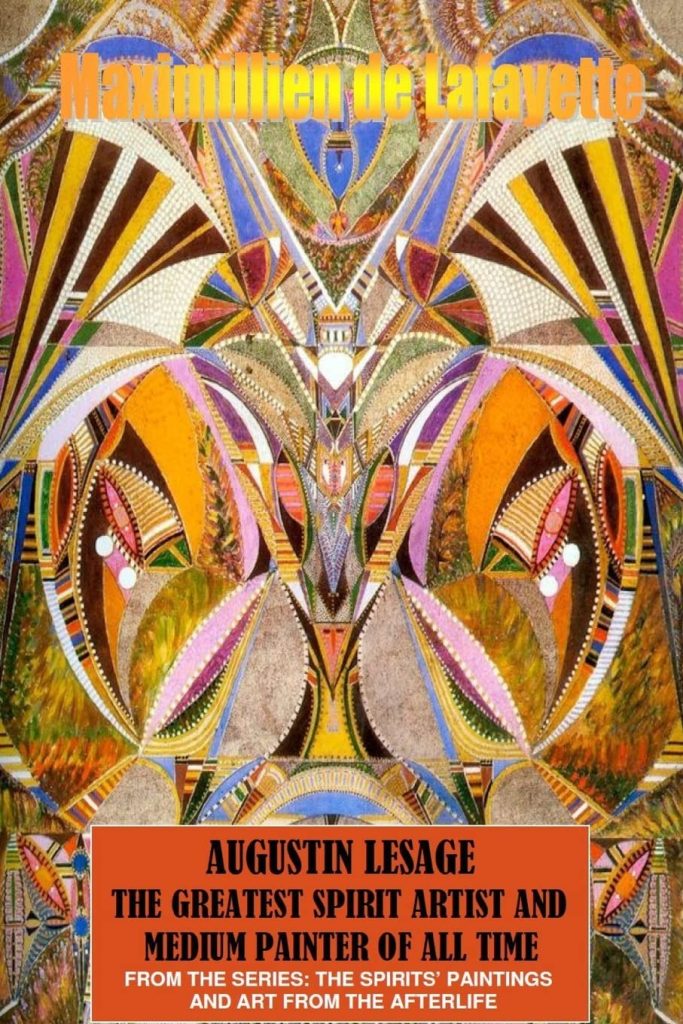
Augustin Lesage
For many years, Spiritualist art was overlooked or marginalized by mainstream art history. Yet historians now recognize that these artists helped shape the development of modern abstraction. Spiritualist painters developed their own visual languages rooted in internal experience rather than in outward representation. These approaches anticipated many aspects of twentieth century abstract art, showing that representation could expand into expression rooted in feeling and intuition.
Scholars have observed that artists like Houghton and af Klint produced works that prefigure abstract art through their focus on inner reality, symbolic surface, and visual form that did not depend on recognizable subjects. This influence is now seen as part of a broader cultural shift in the understanding of what art could be, especially in relation to inner experience rather than literal depiction.
Spiritualist art speaks to a longing that remains alive in contemporary culture, a desire to experience something beyond the visible and the literal, to feel connected to inner realms of meaning, mystery, and intuition. In a time dominated by screens and fast visual consumption, Spiritualist works remind us that art can be a pathway into depth, reflection, and presence.
Whether through the flowing color structures of Hilma af Klint, the intricate spirit guided drawings of Georgiana Houghton, or the trance inspired compositions of Laure Pigeon, Spiritualist art invites viewers to engage not just with form, but with experience, feeling, and possibility. Contemporary artists continue to explore themes of consciousness, transcendence, and inner worlds, showing that the questions Spiritualist art raised have never disappeared, only evolved.
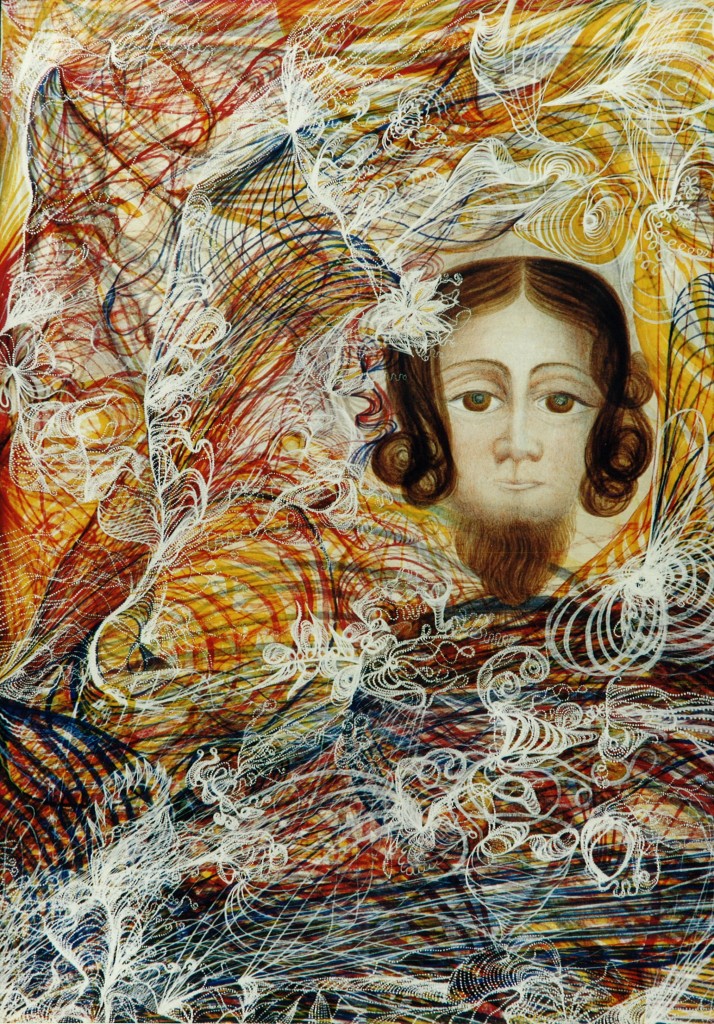
Georgiana Houghton – The Portrait of Lord Jesus